Child’s Room: Décor Ideas for a Stylish and Functional Wardrobe
This publication is also available in:
 Français
  Deutsch
  Italiano
  Español
  English (US)
What if the wardrobe became a space for expression for the child, as beautiful as it is useful?
The start of the school year is often an opportunity for decluttering. But rather than hiding everything behind closed doors, why not envision the child’s room as an open space for their clothes?
At the intersection of design and pedagogy, certain educational approaches (like Montessori) invite us to make clothes visible and accessible to encourage autonomy. When paired with an aesthetic approach, these ideas become a new way of thinking about daily life: the child learns to choose, to match, to tidy up… and is introduced from a young age to elegance as an awareness of the world.
Here’s how to create a stylish and useful wardrobe that enhances the room and accompanies the child in their growth. A wardrobe that educates, inspires, and gently structures the first gestures of independence.
The child-height rack: more than just a piece of furniture, an educational gesture
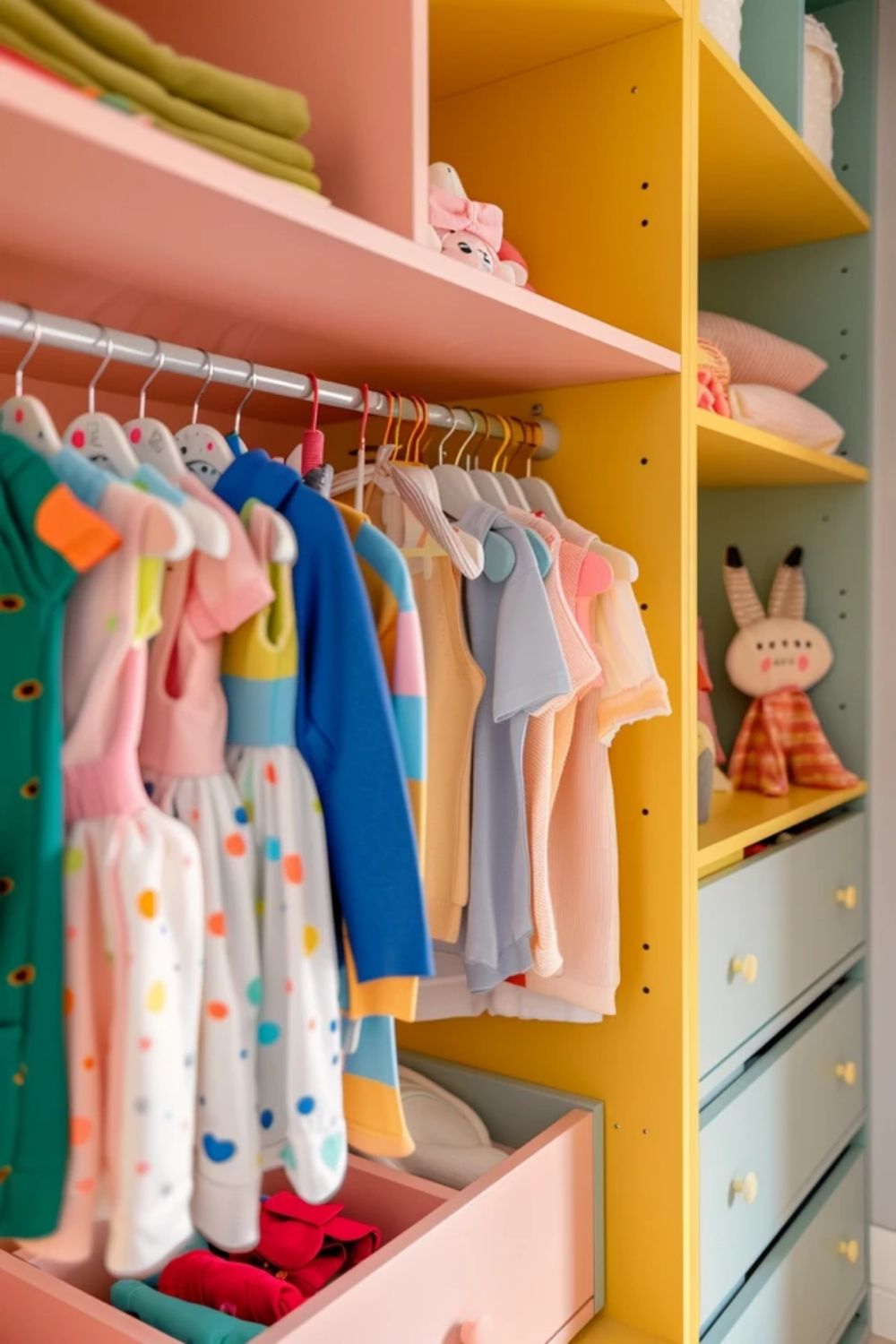
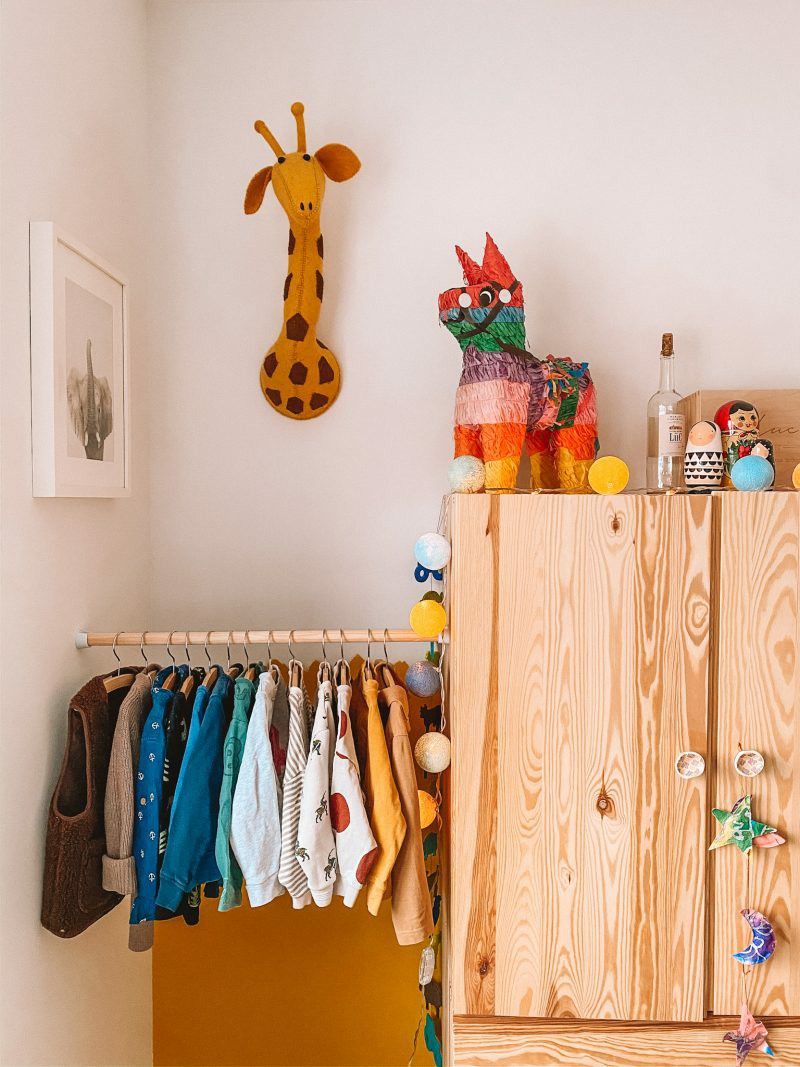
In the child’s universe, furniture is not just an object: it is an invitation. A well-sized rack, made of light wood or thin metal, allows the child to see and access their clothes. This simple gesture of accessibility transforms the routine: choosing an outfit becomes an exploration, a game, an act of affirmation.
In a room designed at their height, the child becomes the actor of their dressing. They touch, compare, hang up, unfold. This direct connection with clothing contributes to a sensitive education of taste, material, and the way one presents oneself to the world. It is a discreet yet foundational learning that
What if the wardrobe became a space for expression for the child, as beautiful as it is useful?
The start of the school year is often an opportunity to declutter. But rather than hiding everything behind closed doors, why not consider the child’s room as an open space for their clothes?
At the intersection of design and pedagogy, certain educational approaches (like Montessori) invite us to make clothes visible and accessible to encourage autonomy. Combined with an aesthetic approach, these ideas create a new way of thinking about daily life: the child learns to choose, to match, to tidy up… and is introduced from a young age to elegance as an attention to the world.
Here’s how to create a stylish and useful wardrobe that enhances the room and supports the child in their growth. A wardrobe that educates, inspires, and gently structures the first gestures of independence.
The child-height rack: more than just furniture, an educational gesture
In the child’s universe, furniture is not just an object: it is an invitation. A well-sized rack, made of light wood or fine metal, allows the child to see and access their clothes. This simple gesture of accessibility transforms the routine: choosing an outfit becomes an exploration, a game, an act of affirmation.
In a room designed with everything at their height, the child becomes an actor in their dressing. They touch, compare, hang, and unfold. This direct connection with clothing contributes to a sensitive education regarding taste, material, and the way one presents oneself to the world. It is a discreet yet foundational learning that transcends fashion to reach self-care education.
Among the aesthetic and functional options, we highlight the racks from brands like OYOY Living Design, Charlie Crane, or Rose in April, where Scandinavian minimalism meets subtle poetry. Some models also include drawers or low shelves, further enhancing autonomy.
Natural materials and sustainable objects: soft decor, bold style
A stylish wardrobe is not just about clothing. The storage itself becomes an element of decoration. We opt for wicker or sea grass baskets, untreated wooden hangers, and washed linen textile boxes. Every object matters, both for its functionality and for the softness it brings to the room. The bedroom becomes a cohesive, reassuring, and beautiful universe.
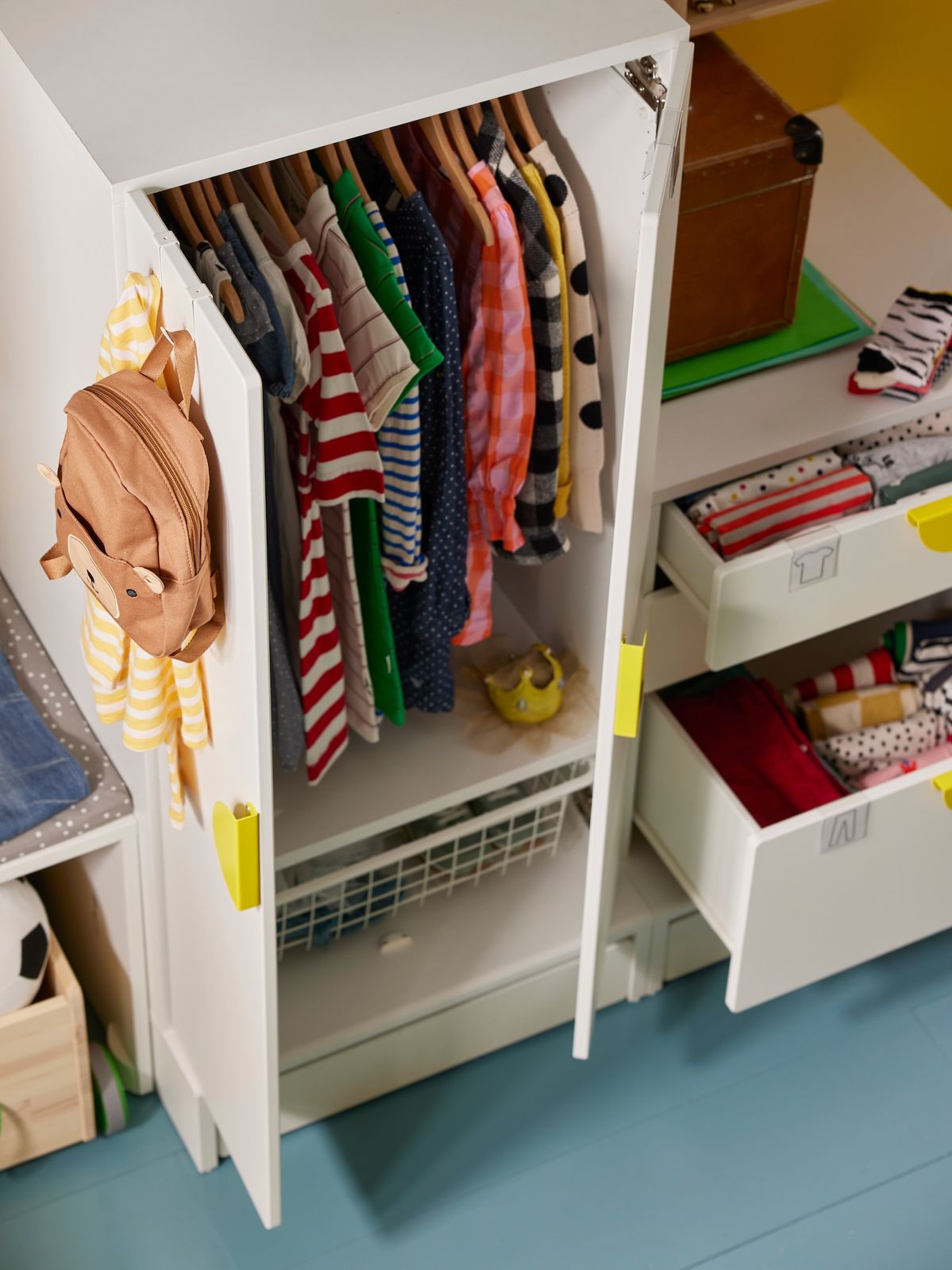
The stackable crates from Liewood, the baskets from Aykasa, or the storage bins from Mushie, available in subtle tones (sage, clay, sand, vanilla), allow for storage without hiding. Accessories, pajamas, slippers, and little treasures can be placed there too. The aesthetics of storage becomes a language in itself, a form of education to beauty through daily use.
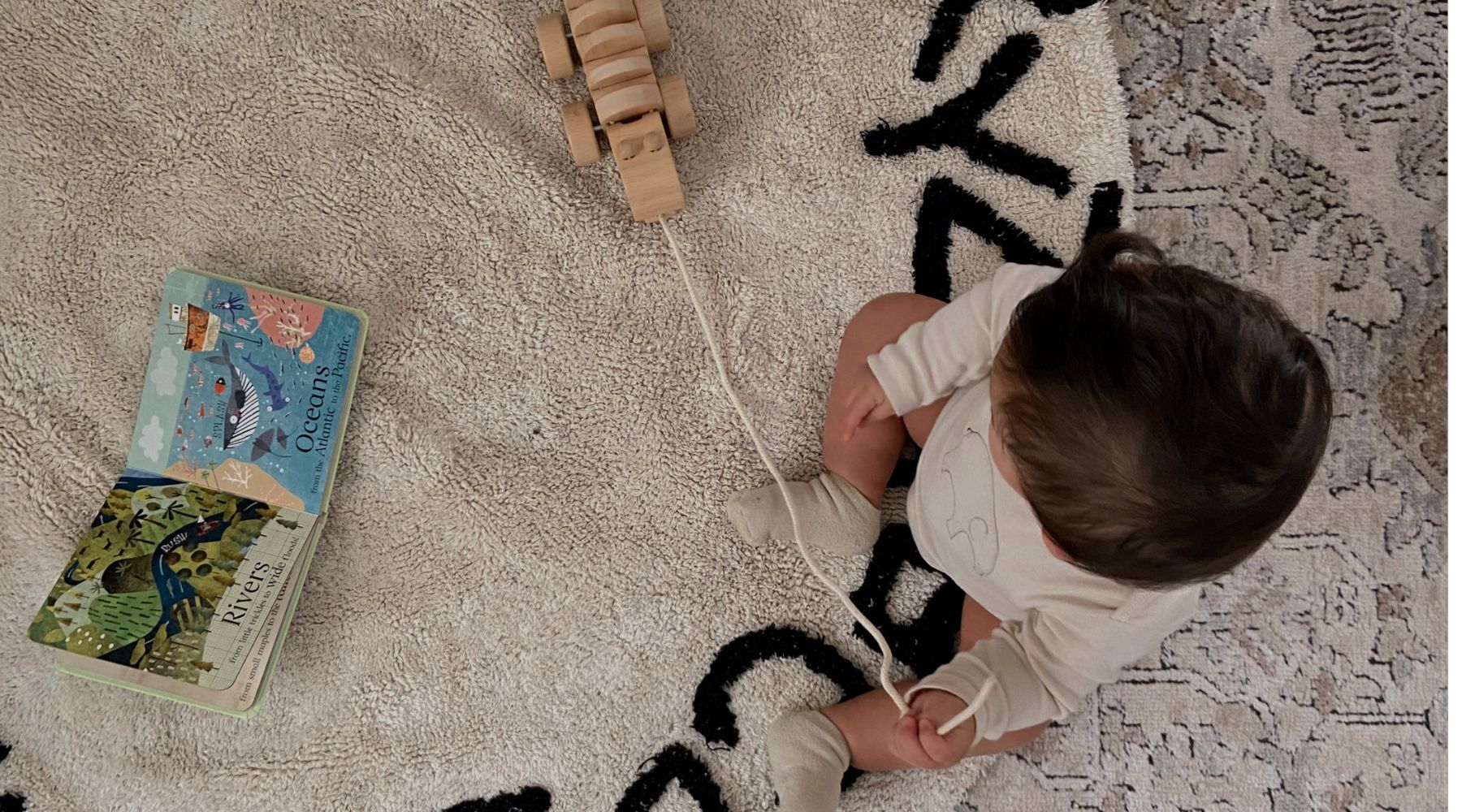
Light curtains, looped wool rugs, or paper lamps also bring a sensory harmony. A well-thought-out room does not overwhelm: it suggests, it envelops, it invites. Style sneaks into the details, and the child experiences their first encounters with a world that is orderly, gentle, and welcoming.
Stylish autonomy: involving the child in choosing their outfits
In the morning, instead of imposing choices, we propose them. One outfit, two options, a calm ritual. By involving the child in choosing their clothes, we value their decision-making ability, while fostering a form of aesthetic awakening. Even at three years old, a child knows what they like to wear, what makes them comfortable, and what amuses them. This moment becomes a space for dialogue, joyful negotiation, and projection.
To facilitate this moment, clothes can be arranged by outfit, in distinct baskets or on thematic racks. On Monday, loose pants and a soft cardigan. On Tuesday, a cotton gauze dress and high-top sneakers. The idea is not to prefigure every day but to open up possibilities while maintaining a calming structure. A small wall mirror can also be added, so the child can look at themselves, discover themselves, and learn to read themselves in their choices.
This morning ritual then becomes a moment of complicity. It opens the day with gentleness and responsibility, valuing clothing as a vector of identity, expression, and comfort. And when the chosen pieces have been thoughtfully considered, the child subconsciously perceives this quality, this coherence, this attention directed towards them.
What if the child’s room became the first space for dialogue between beauty and practicality? A place where aesthetics, functionality, and autonomy intertwine in a shared vision: that of a daily life designed with care. Getting dressed, tidying up, choosing: all gestures of adulthood, placed on small shoulders but carried by a grand idea – that of an elegant, vibrant, and free childhood.