Advent Calendars 2025: What Trends Are Dominating in the Children’s World?
This publication is also available in:  Français
  Deutsch
  Italiano
  Español
  English (US)
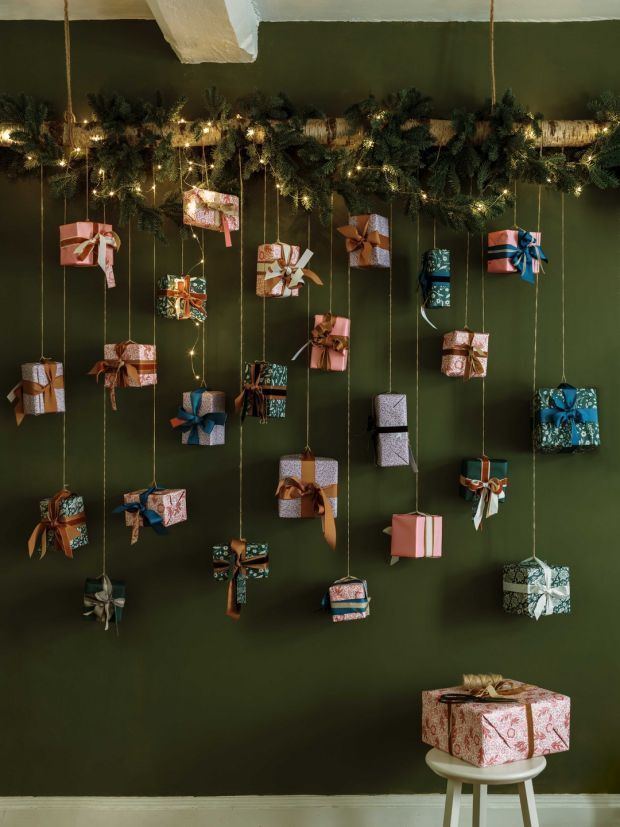
In 2025, families are redefining the Advent calendar: more aesthetic, more premium, more narrative. A ritual that becomes a true decorative piece.
In 2025, the Advent calendar for children far exceeds its status as a seasonal accessory. It becomes a cultural object, a discreet manifesto of family values — balancing aesthetics, sweetness, and the desire for a more intentional daily life. Google searches combining “sustainable Advent calendar for children” or “minimalist fabric Advent” are progressing season by season, while premium concept stores — Smallable, Liewood, or Konges Sløjd — confirm a growing appetite for well-crafted pieces, whether made from organic cotton, wood, or in the form of micro-activities designed to create connection.
However, the 2025 trend is not limited to reusable items. Families are also claiming more classic calendars — puzzles, mini-figures, creative activities — as long as they are beautiful, well-edited, and coherent with a soft and contemporary aesthetic. Scandinavian and Japanese styles dominate, with their palettes of almond milk, caramel, linen, and terracotta. Leading brands — Liewood, Fabelab, Konges Sløjd — are expanding their ranges; other houses attract attention with more traditional but impeccably illustrated calendars.
This season, the Advent calendar becomes a revealer: what parental expectations, what values, what emotions are we trying to convey through twenty-four days of anticipated sweetness?
Market data shows a clear increase in the premium segment. According to trends observed at Smallable and Bonton, the demand for children’s Advent calendars has been growing for three years, with a marked peak for models with polished designs and noble materials. In terms of SEO, searches for “minimalist Advent calendar,” “premium children’s Advent,” “children’s activity calendar” are recording double-digit increases as early as the end of September.
In concept stores, parents express a clear need: to offer a calendar that is not just a simple “reservoir of surprises,” but an aesthetic object that naturally integrates into a contemporary interior. Models made from organic cotton, light wood structures, or even traditional calendars — progressive puzzles, mini-observation games, small figurines — gain ground as long as they fit into a graceful and coherent universe.
Premium no longer means ostentatious: it’s a quest for visual coherence, reasonable durability, and a gentler, almost ritualistic unboxing experience.
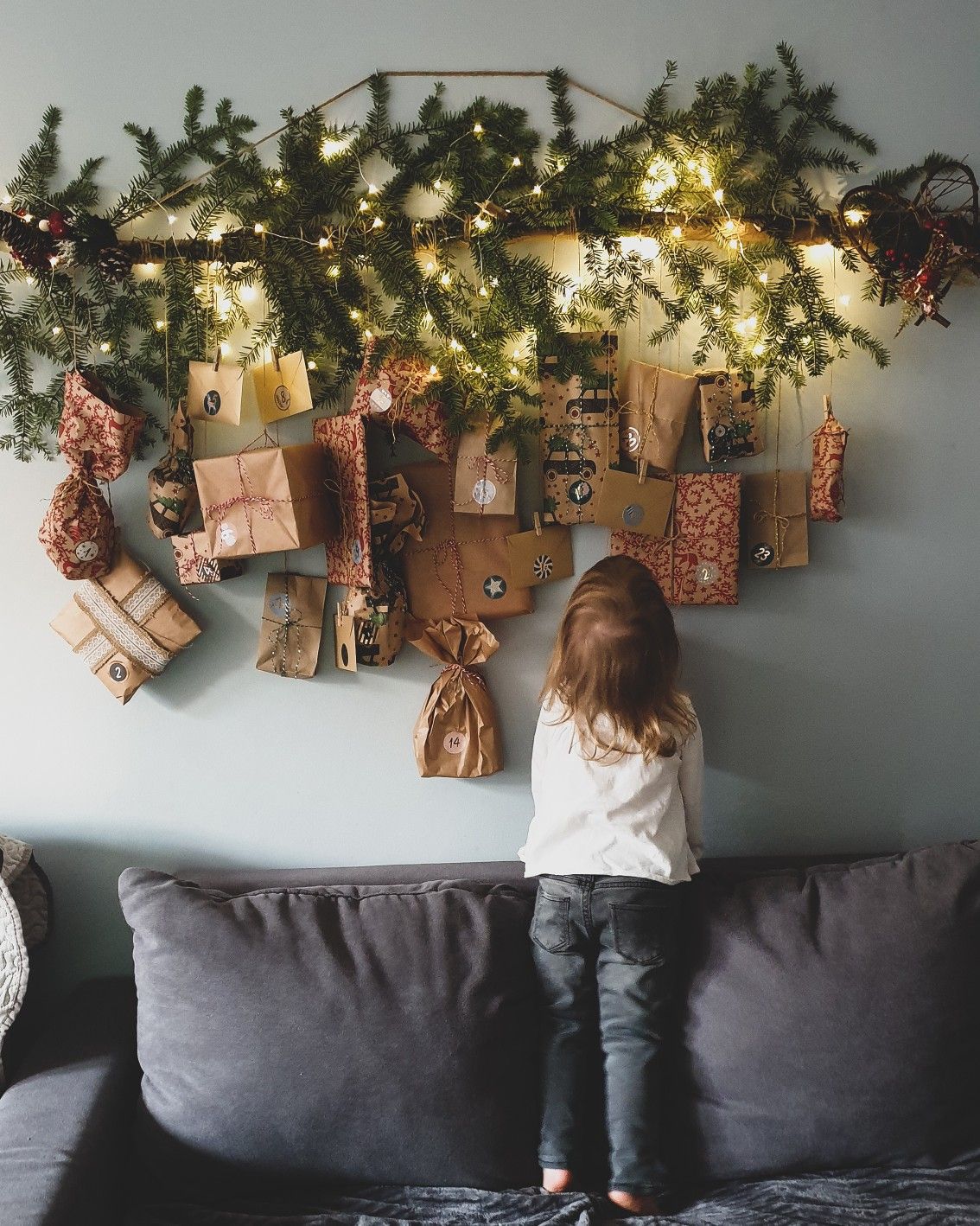
In 2025, two influences guide the demand: Scandinavian and Japanese. Warm minimalism for one, graphic poetry for the other. The colors are milky, neutral, raw, sometimes warmed by touches of honey or cinnamon. The materials aim to be noble and textured: thick cotton, soft felt, tender wood.
Families favor stylized animal silhouettes, fine embroidery, light-lined illustrations. The Japanese spirit captivates with its ability to tell a story without overwhelming the space; the Nordic influence reassures with its readability and timeless elegance.
It is this blend that is now establishing itself as the aesthetic standard for the Advent calendar 2025: a graphic softness that accompanies the child without exciting them, calming the space instead of cluttering it.
Leading brands in Advent calendars 2025: Liewood, Fabelab, Konges Sløjd
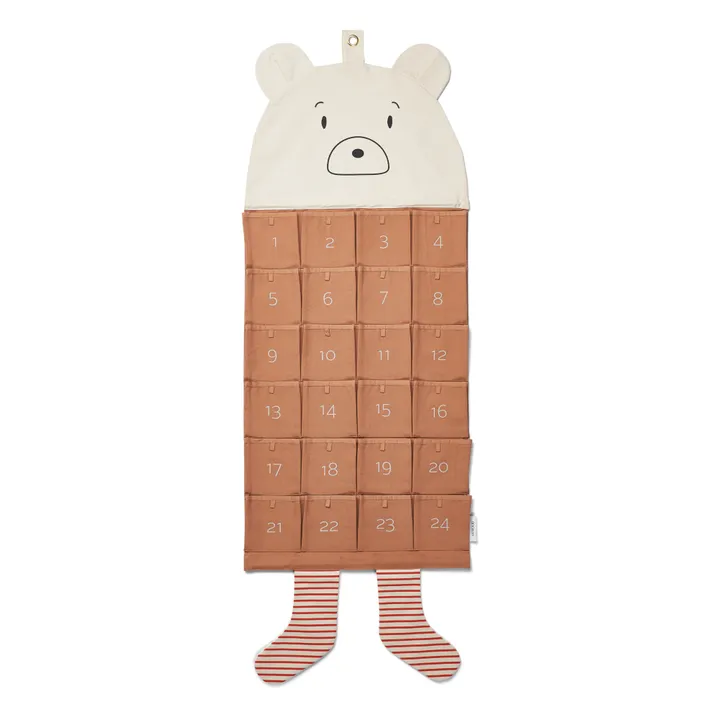
This year again, three brands stand out. Liewood confirms its grounding with the bio cotton calendar with generous pockets, designed as true decorative objects. Their soft charcoal, sand, and oat tones blend effortlessly into a minimalist room.
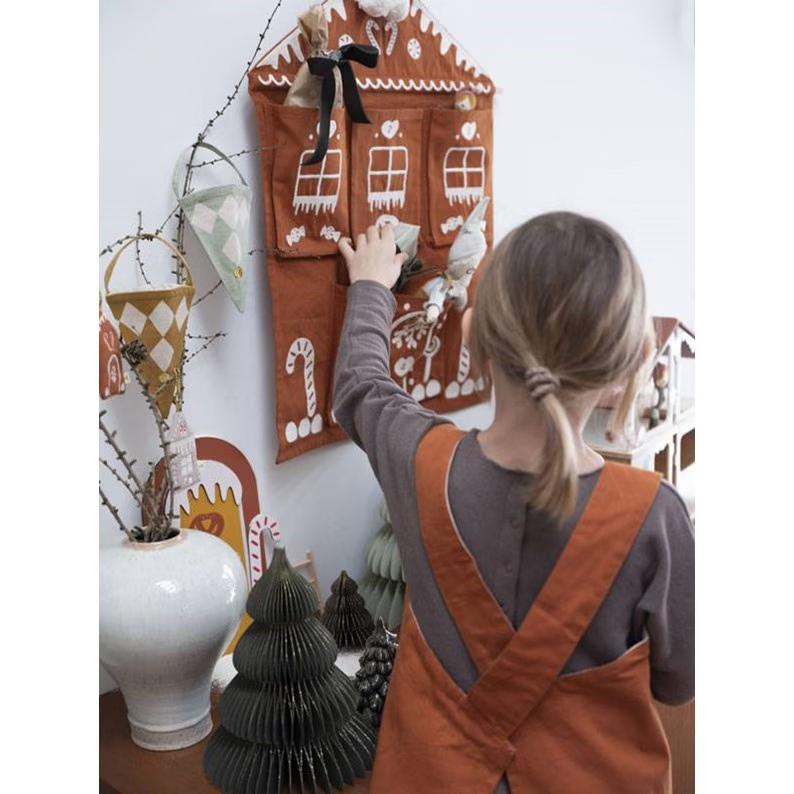
Fabelab focuses on storytelling: forest animals, dreamy elves, hanging houses. Their 2025 calendars, made from naturally dyed organic cotton, perfectly meet the quest for a tender and poetic imagination.
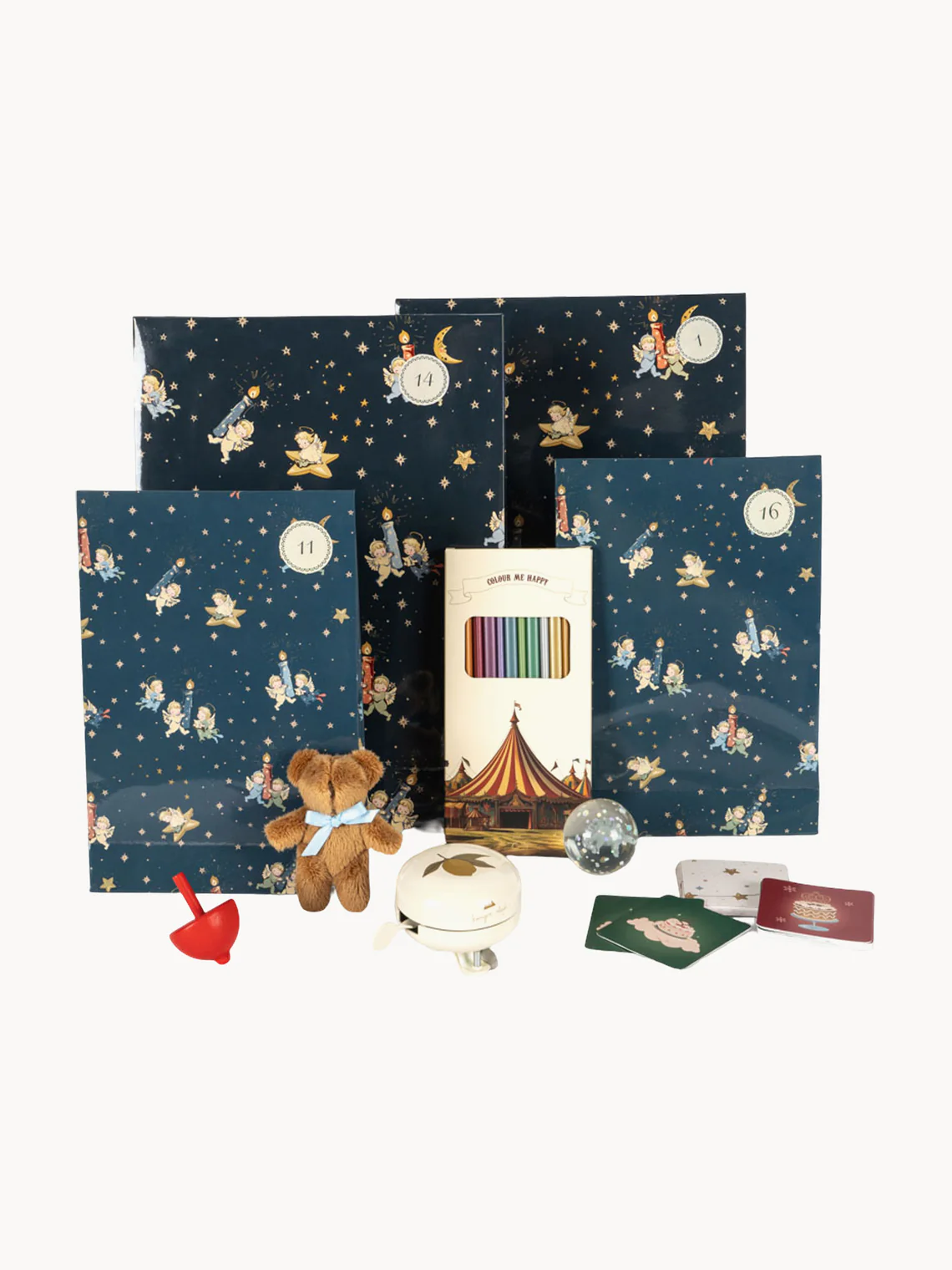
Konges Sløjd, finally, blends delicacy with a festive spirit: gathered pouches, subtle patterns, cream embroidery. The brand also offers more traditional calendars — small figurines, mini-play accessories — while preserving its signature aesthetic.
Around them, a few publishers are making their mark with more classic yet premium calendars: progressive puzzles with refined illustrations, small daily activities, or miniature creative sets, which naturally find their place in homes seeking a more narrative Advent.
Towards a new art of waiting: rituals, activities, sensory micro-surprises
The 2025 calendar is no longer just a support for surprises: it structures a rhythm, a ritual. Parents are increasingly choosing sensory micro-activities — a small coloring card, a seed to plant, a mini-story to read, a figurine to collect — to extend the act of unboxing.
The traditional “one chocolate per day” gives way to more refined experiences: a puzzle that builds over the days, a small observation game, a calming evening activity. Traditional premium calendars find their place here: they offer fragmented storytelling, a pause, a discreet family anchor.
The success of the segment relies as much on the beauty of the object as on what it allows: to slow down, to create bonds, to ritualize the wait in a month often dense and busy.
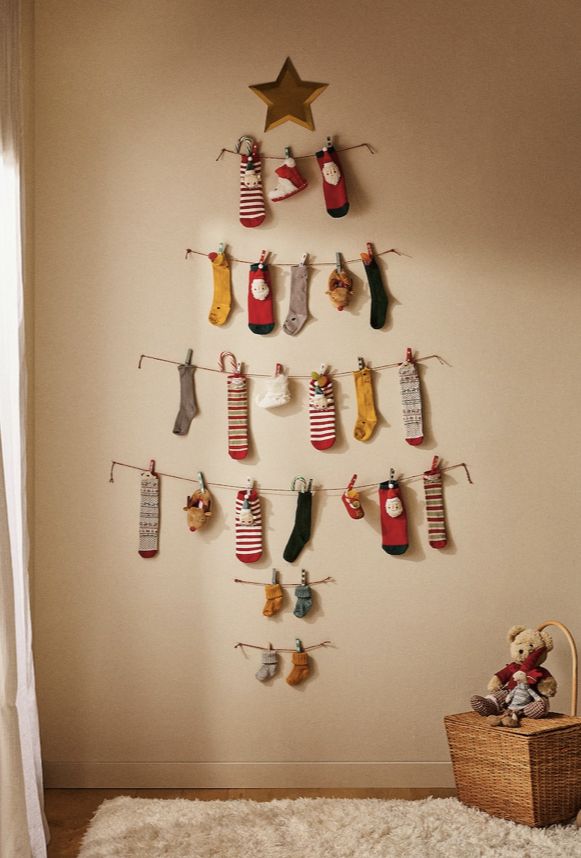
The Advent calendar 2025 stands out as a cultural barometer. It reflects how families want to live, decorate, and transmit. Between minimalism, poetry, and warm little routines, it reshapes the way to wait in winter. And what if, soon, this simple object became the new centerpiece of family aesthetics in December?
Photo Credit: Pinterest & DupePhoto