
The aquatic legacy signed by Davidoff
Some signatures endure with the same quiet authority as a perfectly cut trench. When Cool Water emerged at the close of the 1980s, men’s perfumery stood on the brink of transformation. Freshness, until then a secondary note, became the central statement. Davidoff introduced a new vision of masculinity — composed, elemental, and defined by restraint rather than excess.
A freshness that redefined the codes
Composed by Pierre Bourdon, Cool Water pioneered what would later be recognised as the aquatic fragrance movement. Its opening — crisp mint, aromatic lavender and rosemary — carries the bracing clarity of sea air along the British coastline. There is something distinctly familiar in that cool breeze: understated, invigorating, quietly confident.
In the UK, this aesthetic resonated deeply. It aligned with a more measured vision of masculinity — the kind embodied by Savile Row tailoring or the relaxed refinement seen in recent Burberry collections under Daniel Lee. Freshness here is not flamboyant; it is controlled. It suggests assurance without the need for spectacle.
This balance explains why Cool Water became a staple within the British men’s fragrance landscape, particularly as lighter, fresher scents gained prominence for both everyday wear and summer occasions.


A scent that became cultural reference
The composition unfolds with luminous neroli, softened by amber woods and musk, creating a clean, almost fabric-like trail. It calls to mind a pressed Oxford shirt or a navy blazer worn against the wind along the Cornish cliffs. The effect is crisp yet grounded — modern without feeling transient.
Over the decades, the line has evolved while remaining faithful to its original character. The broader davidoff cool water collection reflects this continuity, exploring new intensities and interpretations without compromising the marine clarity that defined its debut. Each variation feels less like reinvention and more like refinement.
Beyond its commercial success, Cool Water helped establish the blueprint for the fresh summer perfume category. Countless aquatic scents followed, yet few achieved the same equilibrium between aromatic brightness and woody depth. Its influence remains embedded in contemporary perfumery, particularly within the enduring appeal of clean, oceanic compositions.
Minimalism, then and now
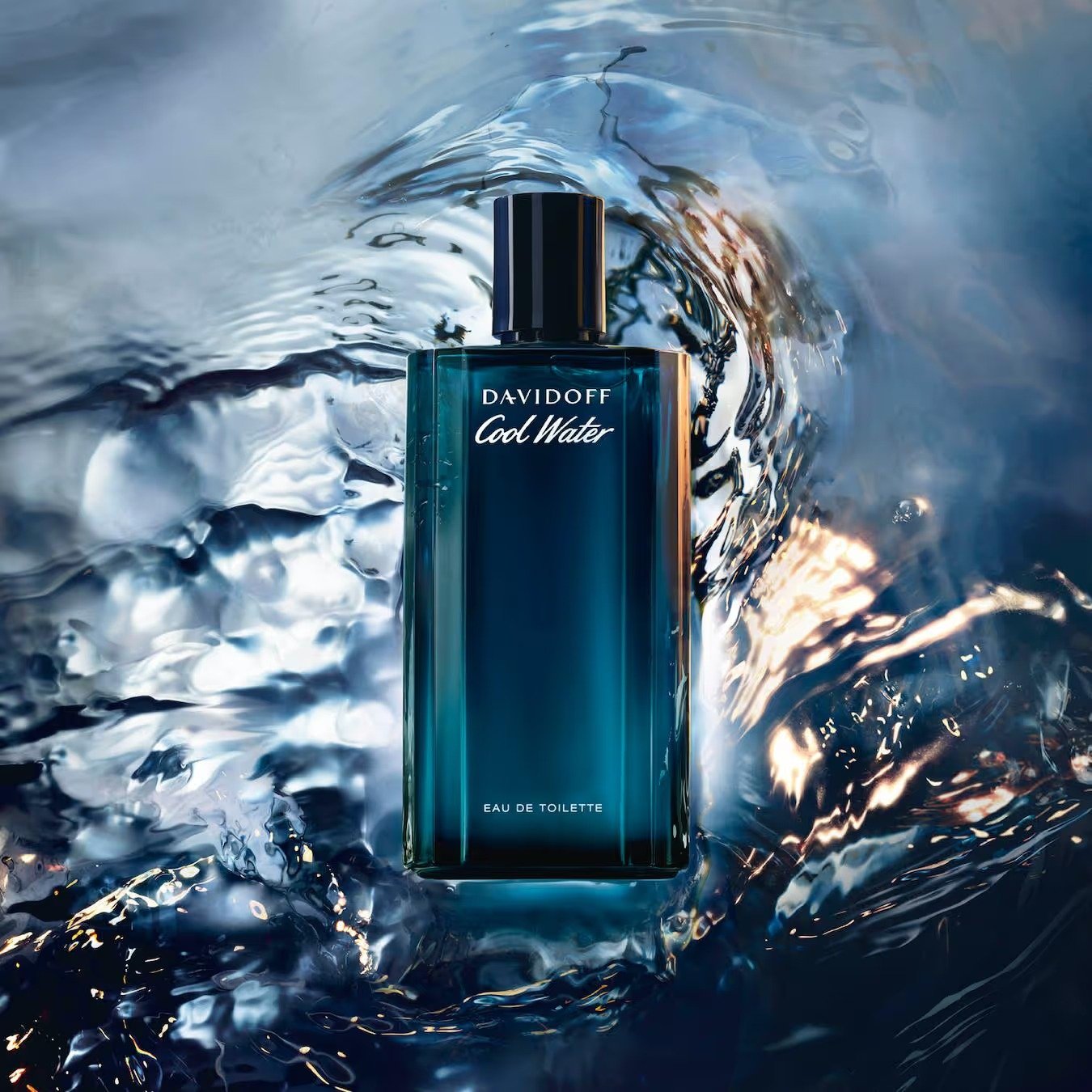
The bottle itself — a deep blue gradient fading into transparency — mirrors this philosophy of restraint. Its silhouette is simple, architectural, almost monolithic. It recalls the minimalist sensibility of the 1990s, when fashion embraced purity of line and material integrity.
Today, as quiet luxury shapes both runway and retail, that aesthetic feels newly relevant. British style, long rooted in craftsmanship and subtlety, increasingly favours muted palettes, precise cuts and tactile fabrics. In this context, Cool Water feels less like a nostalgic relic and more like a natural extension of contemporary taste.
It pairs effortlessly with modern wardrobes: tailored navy wool, soft-structured blazers, fine gauge knitwear. The fragrance becomes an invisible accessory — present, yet never intrusive.

Elemental luxury
There is, perhaps, a broader cultural shift at play. In an era marked by digital saturation and constant noise, elemental references — sea, air, open landscapes — carry renewed appeal. Aquatic fragrances answer that desire for clarity and space.
Cool Water’s legacy lies precisely here. It does not chase novelty; it embodies continuity. Like the British coastline it so effortlessly evokes, it is steady, expansive and quietly powerful.
More than three decades on, its relevance endures not because of nostalgia, but because its central idea — freshness as sophistication — remains compelling. An aquatic legacy, signed by Davidoff, that continues to define what modern elegance can smell like.