Grammar of Forms: Dior, Anderson, and Odundo in Dialogue
This publication is also available in:  Français
  Deutsch
  Italiano
  Español
  English (US)
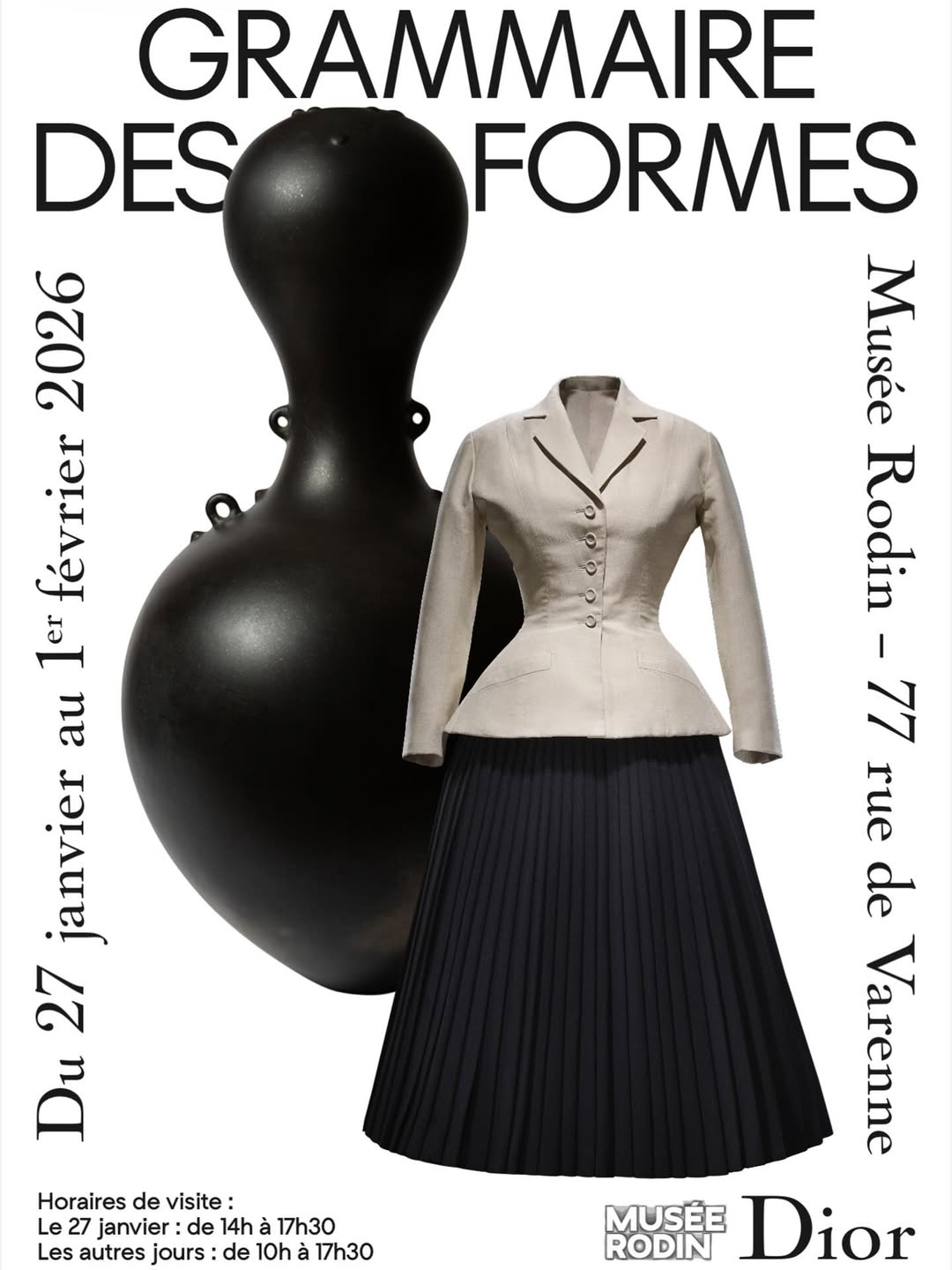
Presented for just six days at the Rodin Museum, the exhibition Grammar of Forms offers a rare opportunity for the public to dive into the world of Haute Couture. Unveiling itself in the floral setting of the Dior show, the installation highlights the dialogue between the arts and crafts that inspired Jonathan Anderson’s debut couture collection for the house. Between archival replicas, drawings by Christian Dior, ceramics by Magdalene Odundo, and silhouettes from the Irish designer, the exhibition is an ode to creation and craftsmanship.
The Grammar of Forms and nature at the heart of the Dior Haute Couture collection
Fashion shows have this fascinating power to transport us. On one hand, through time, with the present of a house that indicates the trends of the coming months. And, in the past, with numerous nods made in homage to the designers who have succeeded one another.
They take us on journeys to other worlds. With, for this Spring-Summer 2026 Dior Haute Couture collection, the impression of nesting in the midst of an enchanted garden. As the forms that reveal themselves take us on a journey through the arts, opening a fascinating dialogue with various levels of interpretation.
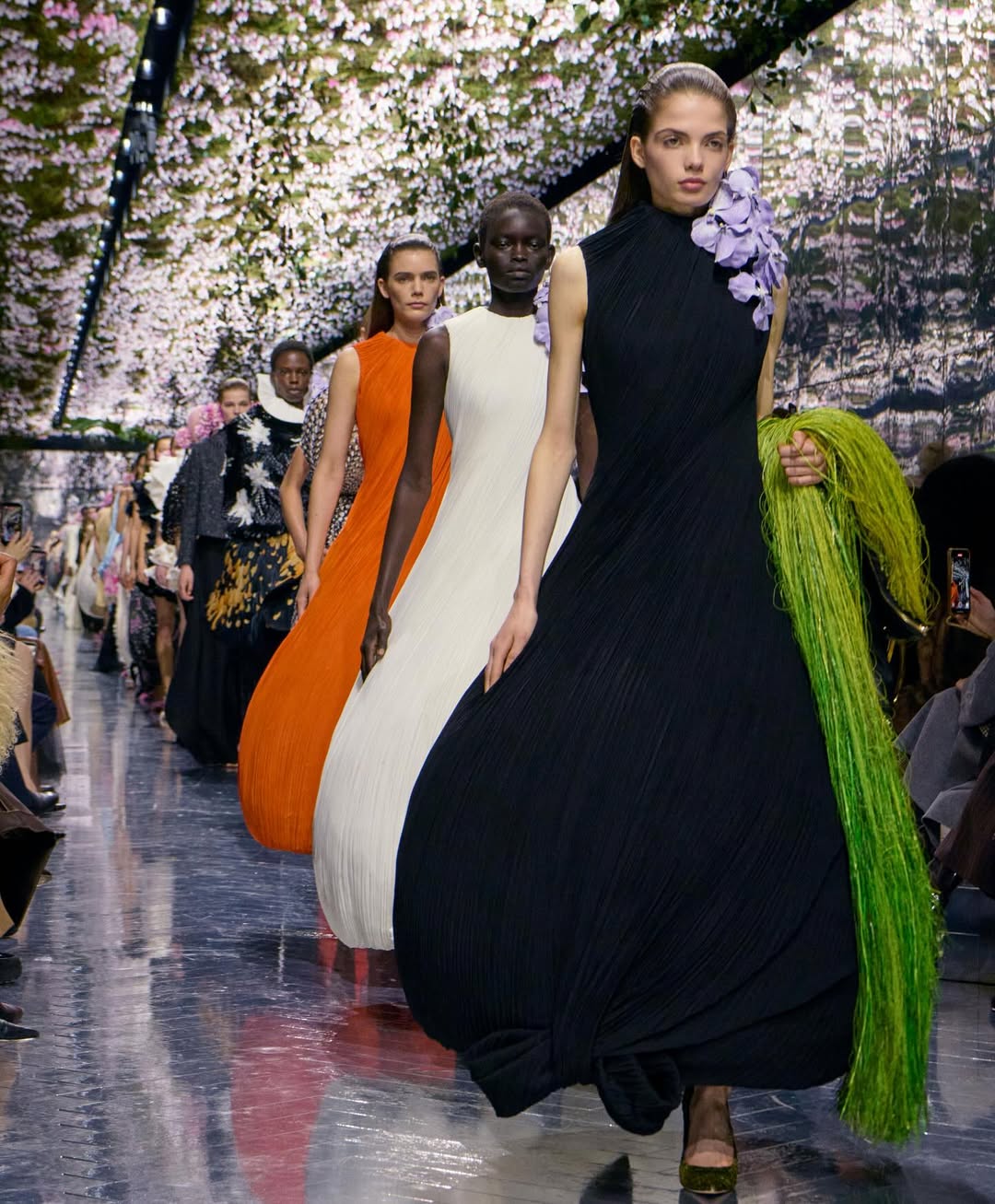
This entire journey, which rests on a story written by a creator through his inspirations, meetings, and collaborations, subtly unveils itself during our first encounter with the collection. Then, as we pause on each piece, we discover the richness of its narrative.
The Grammar of Forms exhibition takes us on a discovery of the genesis of Jonathan Anderson’s inaugural Haute Couture collection for Dior, through an elegant and immersive staging, celebrating art, nature, and couture.
The birth of a first Haute Couture collection inspired by nature
For this first haute couture collection, two major themes accompanied the design of the silhouettes. Firstly, we have nature and its flowers, so dear to Christian Dior.
This motif, very present in the history of the house, has for this collection an additional symbolism. Indeed, during a meeting, John Galliano gifted Jonathan Anderson cyclamen wrapped in black ribbon. This delicate gesture, offered as a sign of encouragement, thus became the genesis of the collection.
It is only natural that the invitation took on this appearance and that we later discovered the flower worn as maximalist earrings. Also, the show’s decor, to be discovered during the exhibition, revealed a rolling and floral green ceiling. While other treasures of nature were unveiled in the form of stones and fossils, transformed into jewelry.
A collection with forms blending ceramics and couture
The second source of inspiration, on the other hand, influenced the curves of the silhouettes. Admiring Magdalene Odundo’s ceramic work for many years, Jonathan Anderson envisioned his collection as a translation of the artist’s vases.
These vases, which are inspired by the curves of the female body, inspired the Irish designer to seek a new vision of couture, just as Christian Dior did in his time, aiming to offer a new interpretation of fashion.
Together, the pottery pieces and the dresses and bags, designed as reflections, offer both an artistic and poetic dialogue. And we can observe closely the echo between their delicate details and the nuances of their material, between clay and fabric.
The legacy of craftsmanship in the spotlight
Very attached to craftsmanship, Jonathan Anderson has always highlighted handmade work, whether within his own brand JW Anderson, or during his years at LOEWE, particularly with the creation of the LOEWE Foundation Craft Prize. Thus, it is only natural that his love and respect for these delicate crafts are at the heart of his work for the Dior house. And even more so, for this first Haute Couture chapter.
The show opened with poetry, featuring a video honoring the artisans and their skills. A visual love letter, celebrating their gestures, patience, and rigor. A whole heritage, passed down through generations, which has given life to these creations.
For this SS26 collection, the small hands of the workshops performed meticulous and remarkable work, highlighting how haute couture techniques seek excellence, innovation, and precision in detail.
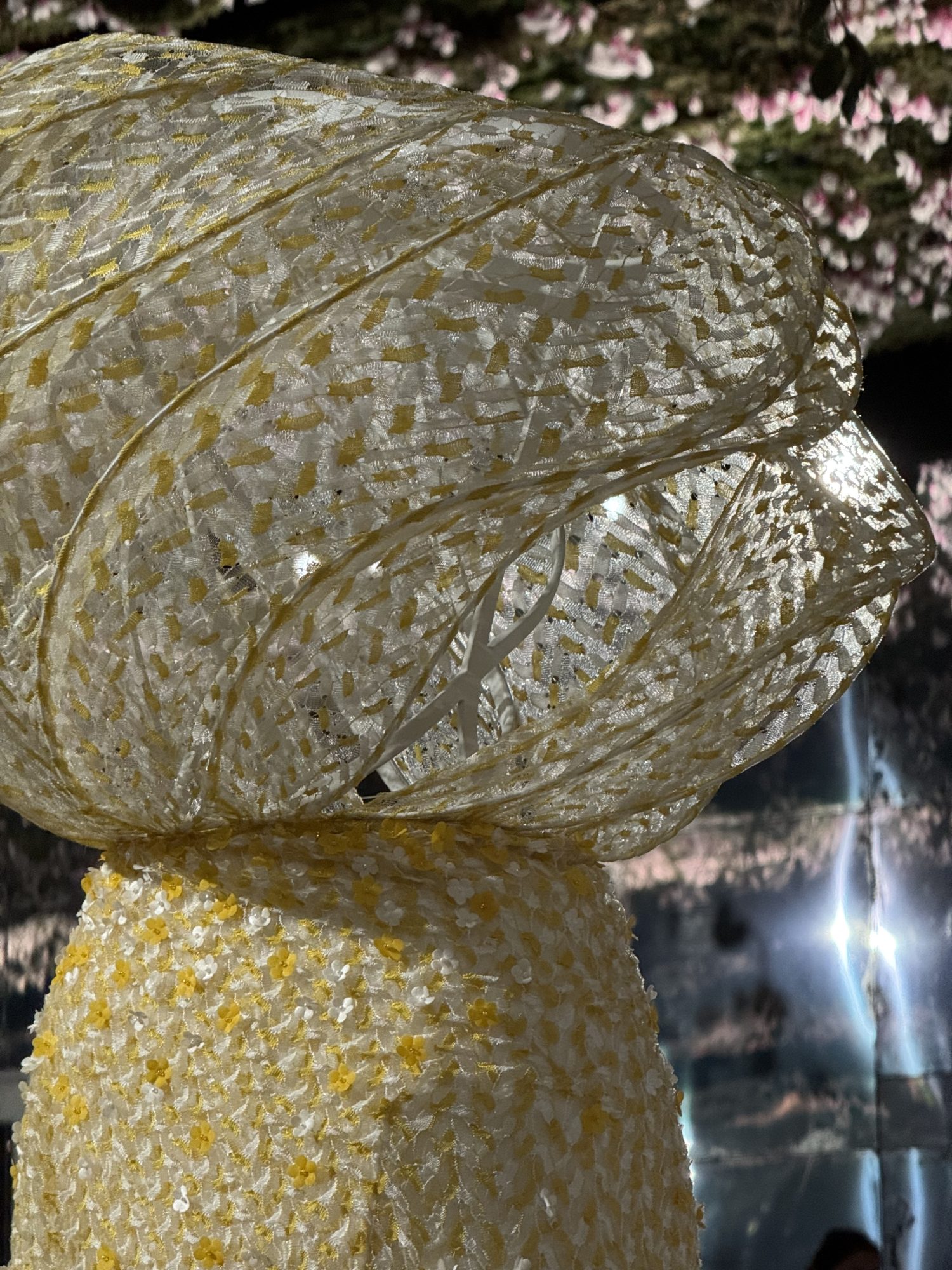
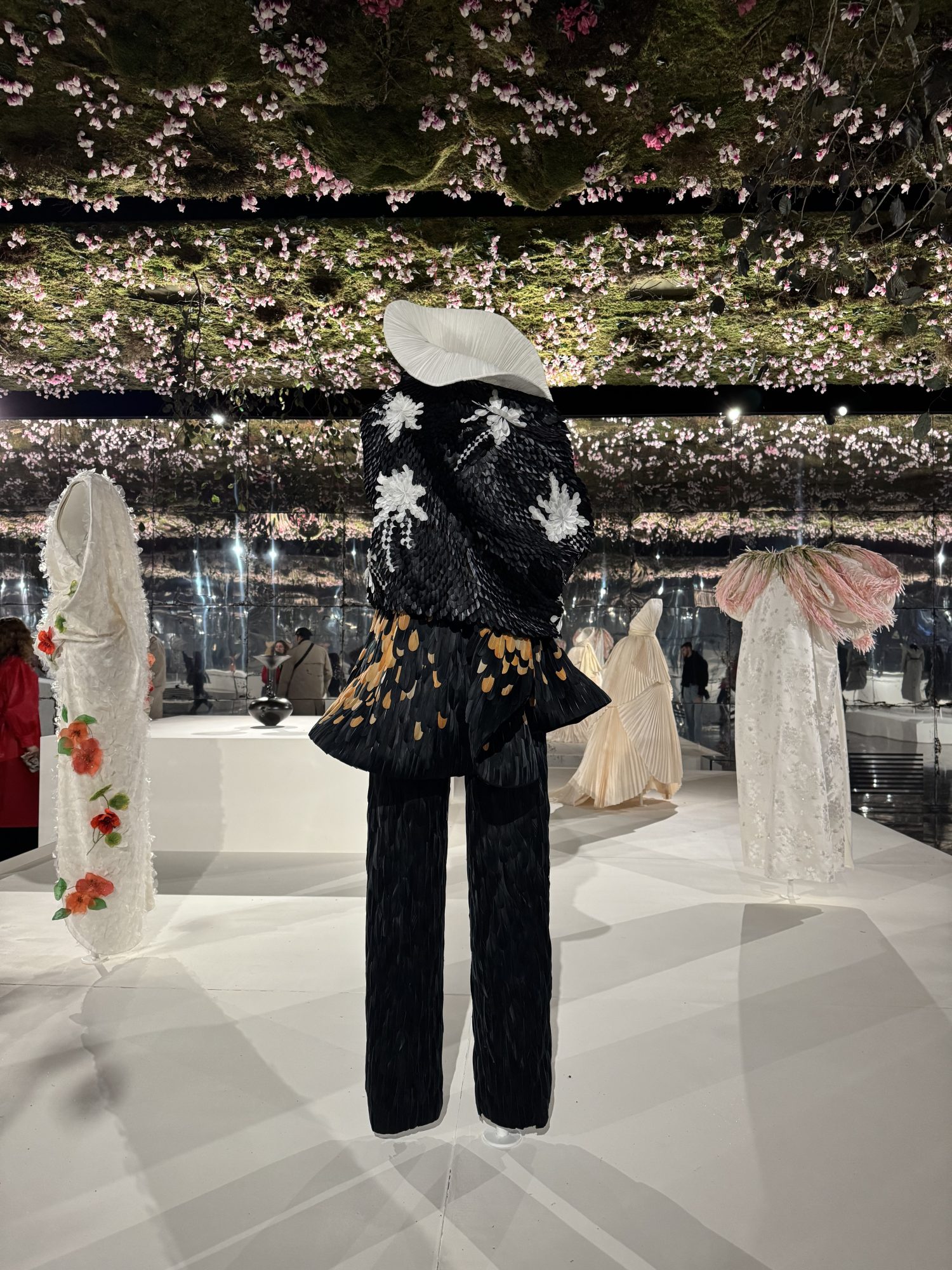
We particularly think of the trompe-l’oeil flowers worn as earrings and brooches. Of these fossil-jewels with sculptural lines. As well as these thousands of feathers cut into scale shapes. Or even the structures hidden beneath the veiled fabrics, creating an impression of volume in suspension.
All these pleats, reverses, fabric combinations, and other border works testify to an exceptional craftsmanship essential to preserve.
Access to the exhibition is granted with an entrance ticket to the Rodin Museum.