Labubu and Jellycat: the success of the plush charm
This publication is also available in:  Français
  Deutsch
  Italiano
  Español
  English (US)
Several months ago, we discussed the strong comeback of bag charms. Adding a vintage touch to our outfits, they managed to carve out a place among our essentials by striking the nostalgic chord. And this was not just a fleeting fashion trend… Because, yes, this trend continues to assert itself more than ever. And now, the plush charm is at the heart of all desires, with Jellycat and Labubu leading the way. Between adorable fruits and vegetables or a slightly creepy monster-rabbit, let’s discover how these have positioned themselves as the new fashion accessories of the moment.
Plush Toys: The New Target of Nostalgic Marketing
It is no longer in doubt, Gen Z has made nostalgia its trademark. Between Y2K style, the return of Sony Cybershot, and now, wired earbuds… This generation, while still seeking innovation in iOS and AI, seems strongly attached to another century. Thus, we have observed, over the past few years, a deployment of nostalgic marketing by brands to attract its preferred target.
However, by 2025, it is no longer just the 2YK aesthetic that fascinates, but rather childhood and cuddly toys. Yes, bag charms like mirrors, figurines, padlocks, and chains are being replaced by the plush charm.
Jellycat: When Adults Fall Back into Childhood
With fruits, vegetables, and even pastries, Jellycat plush toys have won our hearts with their adorable and soft nature. Specializing in cuddly toys, the brand has notably distinguished itself with its plush charm, perfect for adding a touch of innocence (and style) to your handbag.
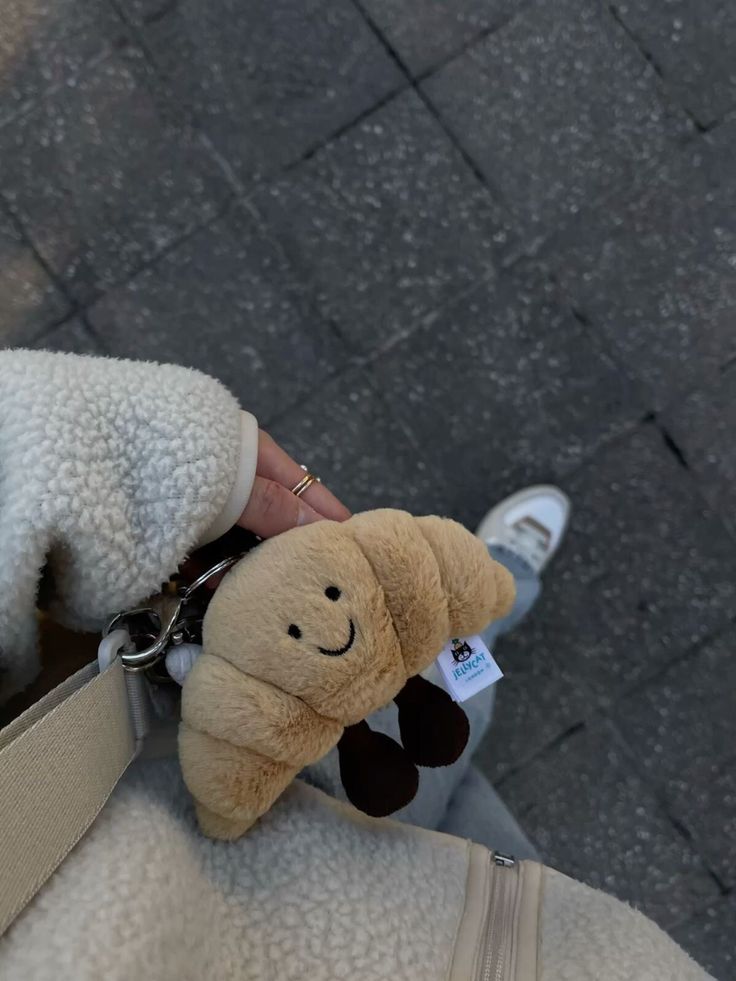

But beyond the cute faces of its plush toys, Jellycat has managed to create an event through an unprecedented customer experience, interactive and making us fall back into childhood even more. Indeed, several stores (including one at Selfridges in London) transformed into fast-food outlets, where plush toy orders were treated like in a real Fish & Chips restaurant! Both young and old flocked to experience this moment. A cleverly crafted recipe that once again showcases the power of nostalgic marketing.
Labubu: The Plush Charm That’s Slightly Creepy and 100% Trendy
While Jellycat plush toys envelop us in softness, Labubu offers a different vibe, let’s say… Both cute and a tad creepy with its devilish smile, the monster-rabbit from the children’s book The Monster has taken over the streets in recent months. Whether it’s in Rihanna’s handbag, Dua Lipa’s, or even your friend’s, this plush charm is everywhere.
Created in 2015 by Hong Kong artist Kasing Lung, this fictional character has seen growing popularity since its commercialization in Pop Mart and its adoption by numerous public figures. Its ugly-cute + retro aspect makes it a perfect target for nostalgic marketing and explains its success, but that’s not all.
Indeed, the success of the Labubu plush charm is primarily explained by its sale through limited editions, which create a sense of fomo (fear of missing out). Sold in blind boxes / mystery boxes (also rising in popularity, linked to the Kawaii culture), these plush toys become coveted items for which purchase and resale prices skyrocket.
Having also partnered with Coca-Cola and One Piece, the Labubu plush charms provoke unparalleled enthusiasm, leading to scenes of conflict in queues to access the stores.


Labubu are now everywhere and are more than ever included in fashion. An auction is currently taking place on the platform and marketplace of Pharrell Williams, Joopiter. Here, we find 14 limited models of the plush, sold in mystery boxes, through a collaboration between Labubu, Sacai, and Carhartt.
The success of the childhood revival proposed by Jellycat and Labubu seems to inspire others. Indeed, Uniqlo has just announced a forthcoming collection for September highlighting Sylvanian Families.
Photo: Pinterest, Unsplash