Weave, Embroider, Sublimate: An Exhibition of Fashion and Know-How
This publication is also available in:  Français
  Deutsch
  Italiano
  Español
  English (US)
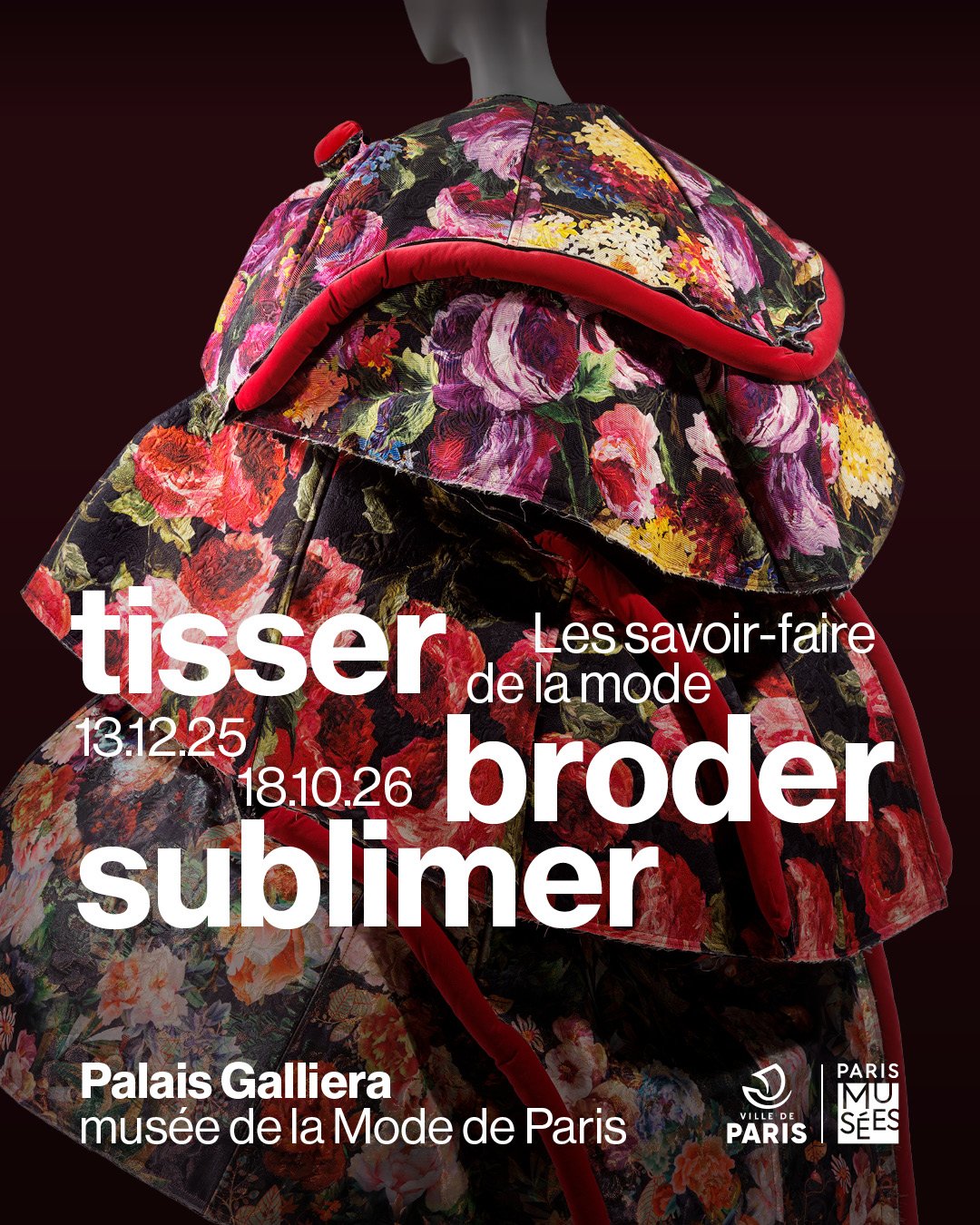
Here is an installation that we were greatly looking forward to and that absolutely fascinated us. The exhibition Weave, Embroider, Enhance. The Craftsmanship of Fashion at the Palais Galliera highlights the richness of our craftsmanship, revealing it at the heart of a journey reminiscent of an enchanted garden. This first part, which is part of a three-part cycle, delights not only through the pieces presented but also through all that we learn during our visit! A lesson in fashion, history, and craftsmanship not to be missed.
An exhibition exploring craftsmanship
Once again, the Palais Galliera offers us a unique dive into fashion, its history, and its techniques. Always skillfully combining the presentation of exceptional pieces with an immersive and information-rich visitor path, we discover at the heart of the exhibition Weave, Embroider, Enhance the rich heritage of the arts related to fashion.
Designed in three parts, which will be revealed until October 2026, this installation charms with its educational aspect. Highlighting various crafts, our visit proves rich in discoveries, particularly thanks to the numerous explanations, creations, and tools presented, including samples to touch and pieces to observe under a magnifying glass.
A true love letter to craftsmanship and its history, this visit is as much a wonder as it is an enrichment of our knowledge. More than ever, the Palais Galliera invites visitors to question and observe the evolution of fashion and the role of its actors through a different lens.
The history of ornamentation at the heart of the exhibition Weave, Embroider, Enhance
For this first part of the exhibition Weave, Embroider, Enhance, the Palais Galliera emphasizes enhancement techniques. Between weaving, embroidery, dyeing, printing, artificial flowers, featherwork, jewelry, and lace, we discover the richness of these techniques, as well as the possibilities they have offered over the centuries to play with silhouettes, volumes, materials, colors, and patterns.
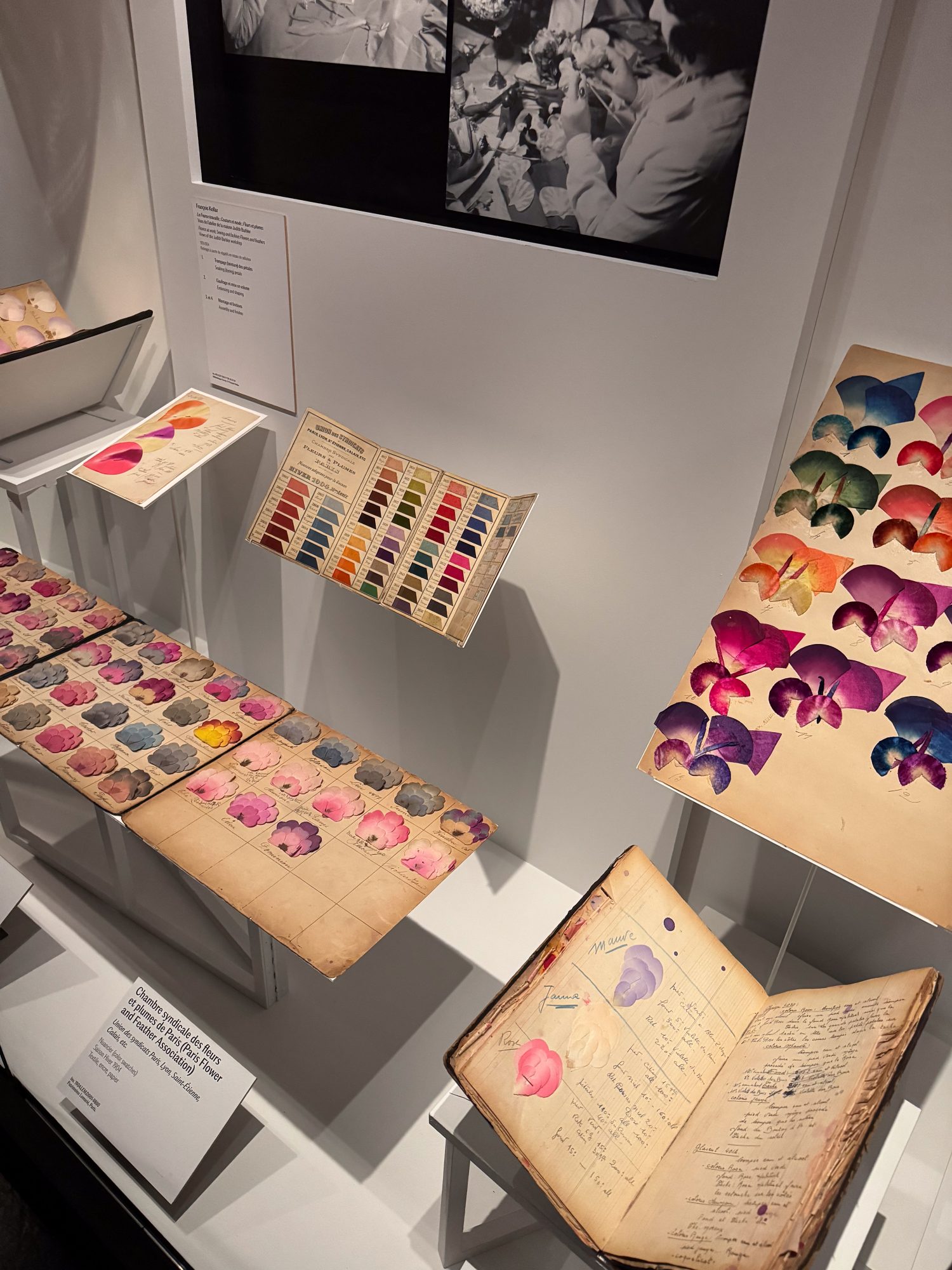
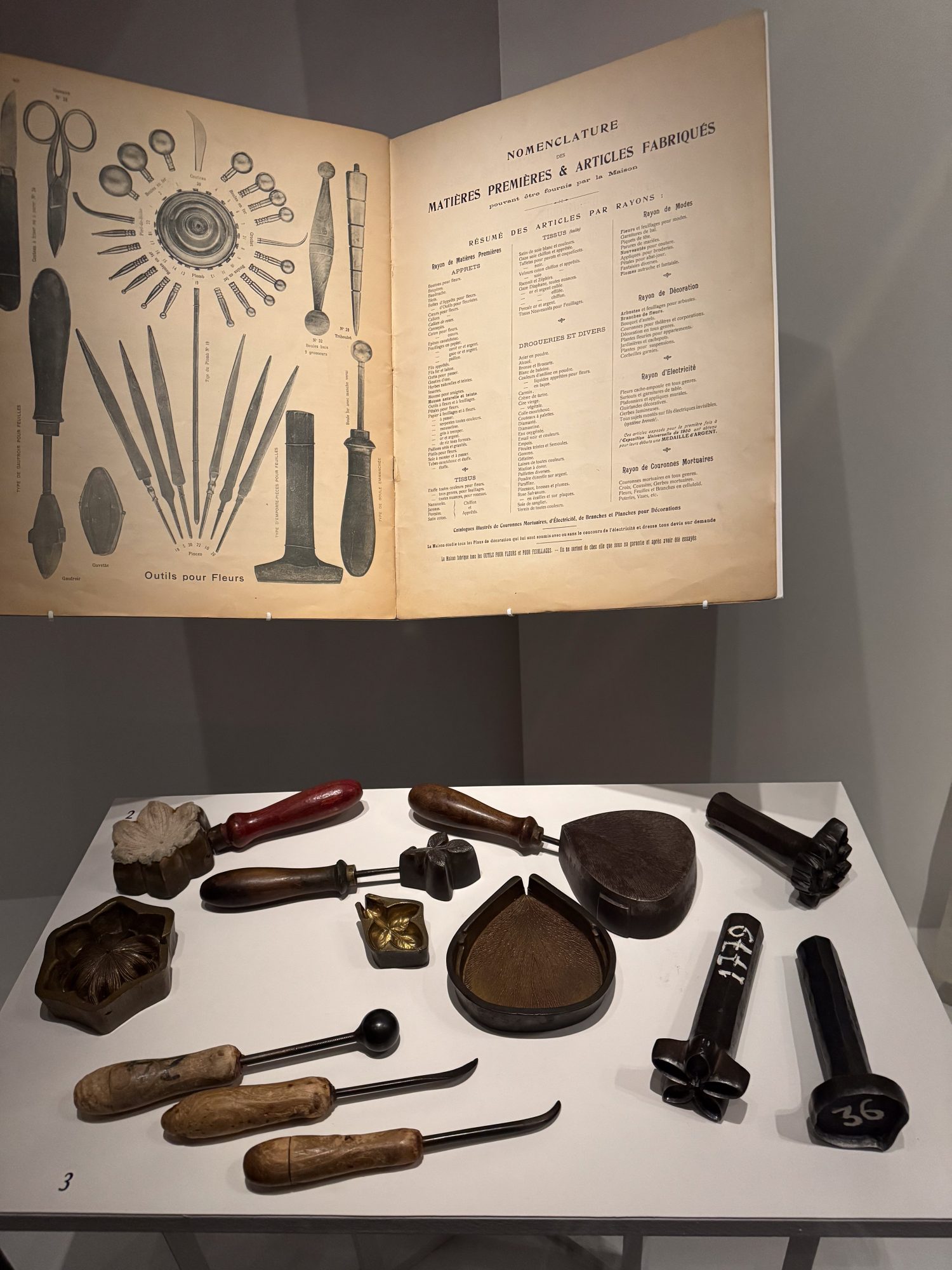
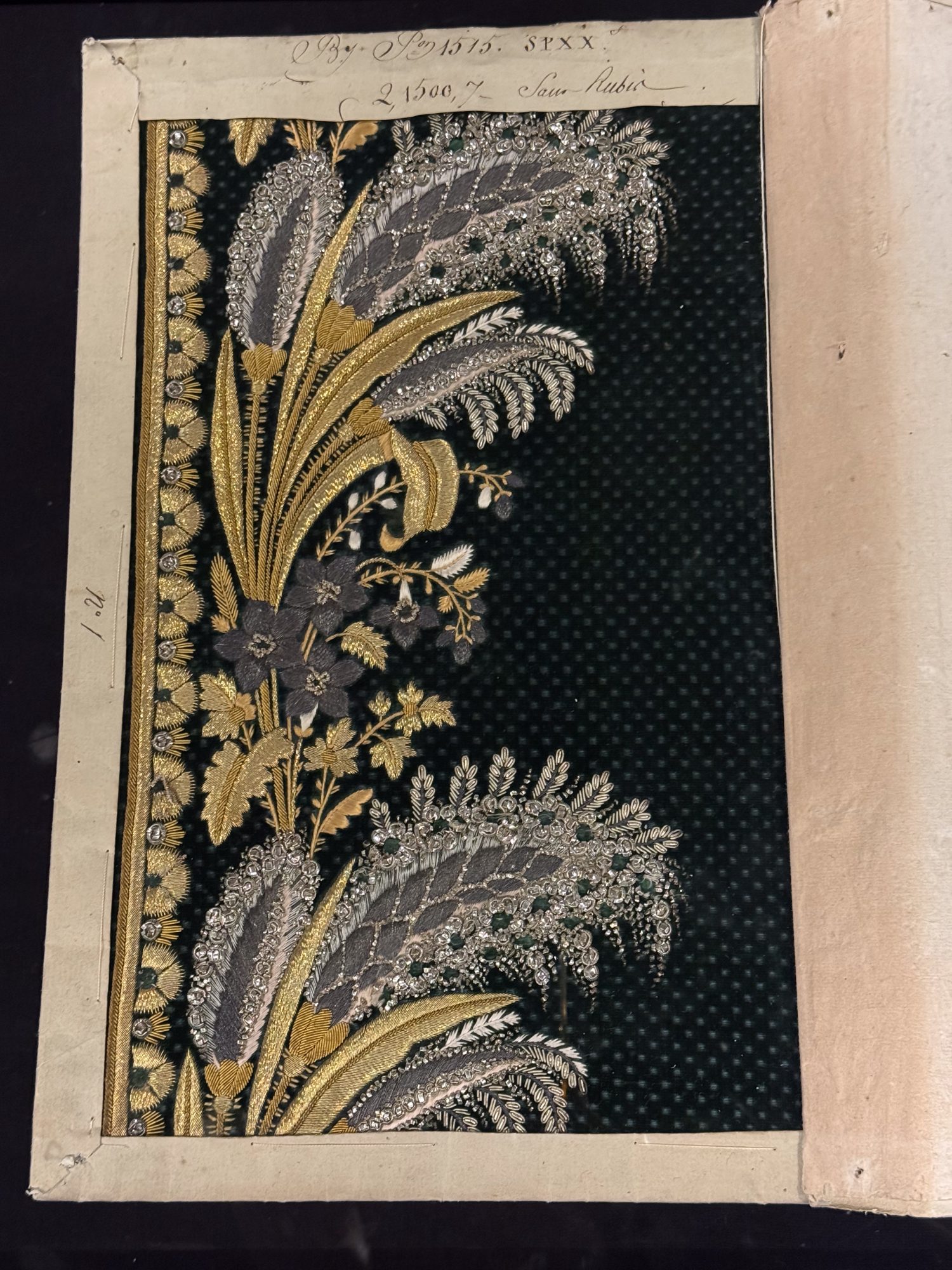
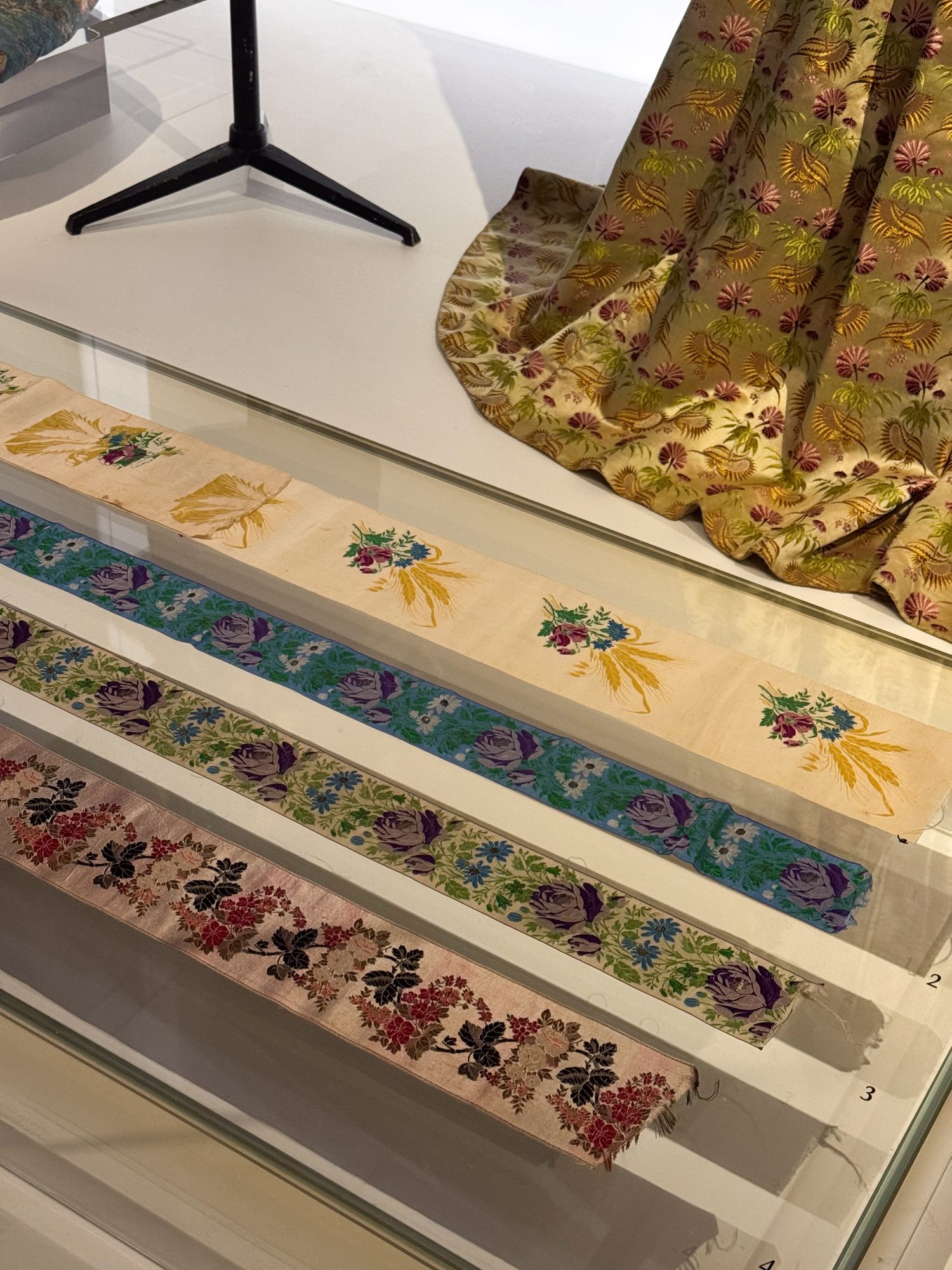
Presented as a timeline, the installation allows for highlighting both the evolution of techniques and the associated trades, as well as the relationship of society and fashion to the use of these crafts.
This journey through time restores the importance of handwork and the quest for innovation. It highlights the unfolding of an art, practiced by some as a hobby, and by others, as a discipline where rigor prevails.
It bears witness to parts of history enriched by the influence of other cultures and commercial exchanges. A time when fashion took flight and mechanization was invited into the process to lend a hand to artisans. It is also a retrospective on the creation of addresses and methods that have today acquired a worldwide reputation, like the silk of Lyon and the Jacquard trade or even the lace of Chantilly.
Ultimately, it is a journey through trends, both in terms of clothing and decorative arts, as well as through the customs of eras that, after all, are not so distant.
The evolution of a floral fashion
It is around the theme of flowers that all these enhancement crafts come together at the heart of the exhibition Weave, Embroider, Enhance. Creating a poetic path rich in colors and patterns, this common thread allows for illuminating the advancement of techniques while tracing the evolution of fashion.
Whether through fabrics, dresses, costumes, shawls, fans, shoes, handbags, or even jewelry and buttons… Floral compositions reveal themselves in various forms and materials, subtly or more prominently.
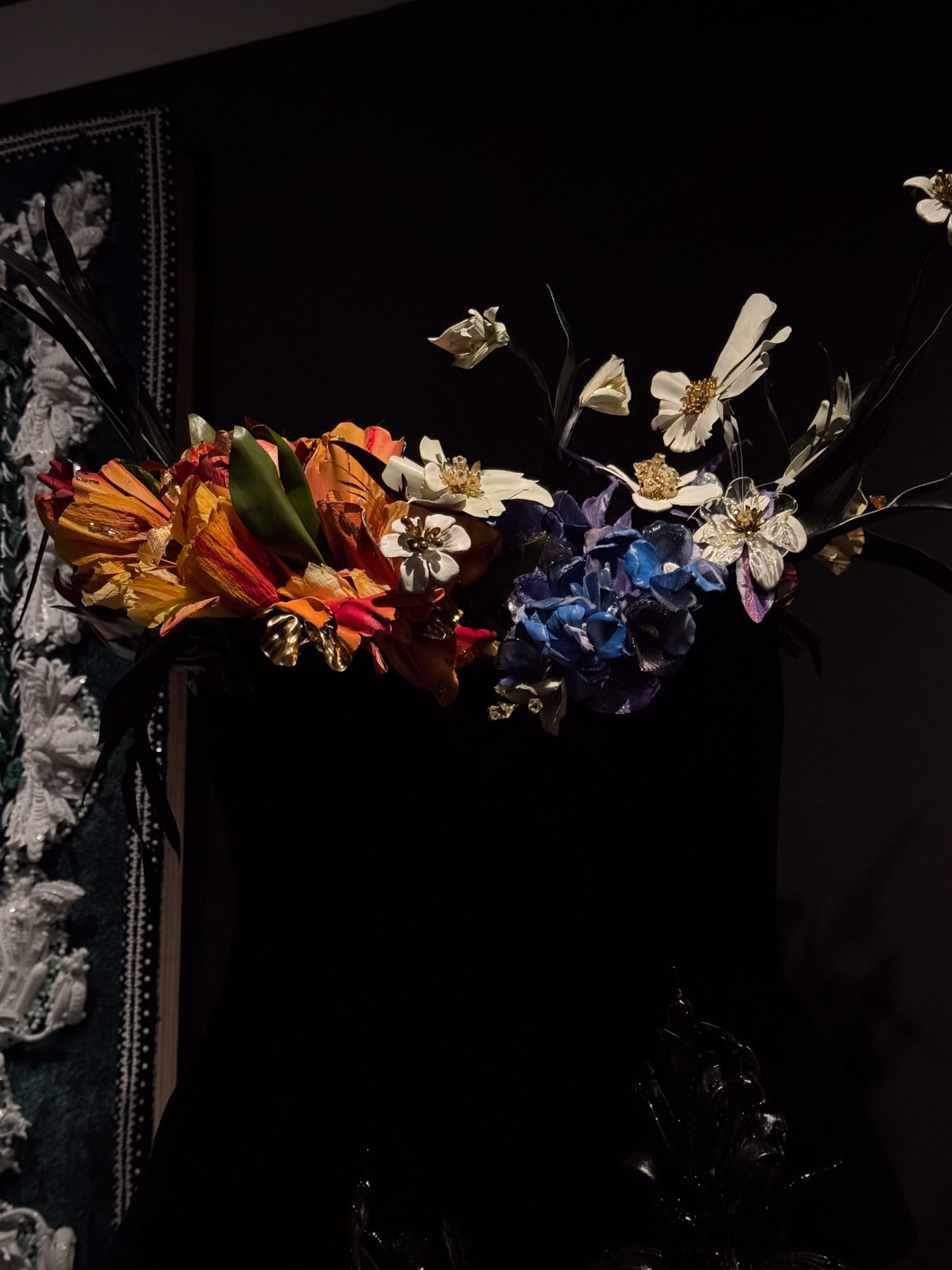
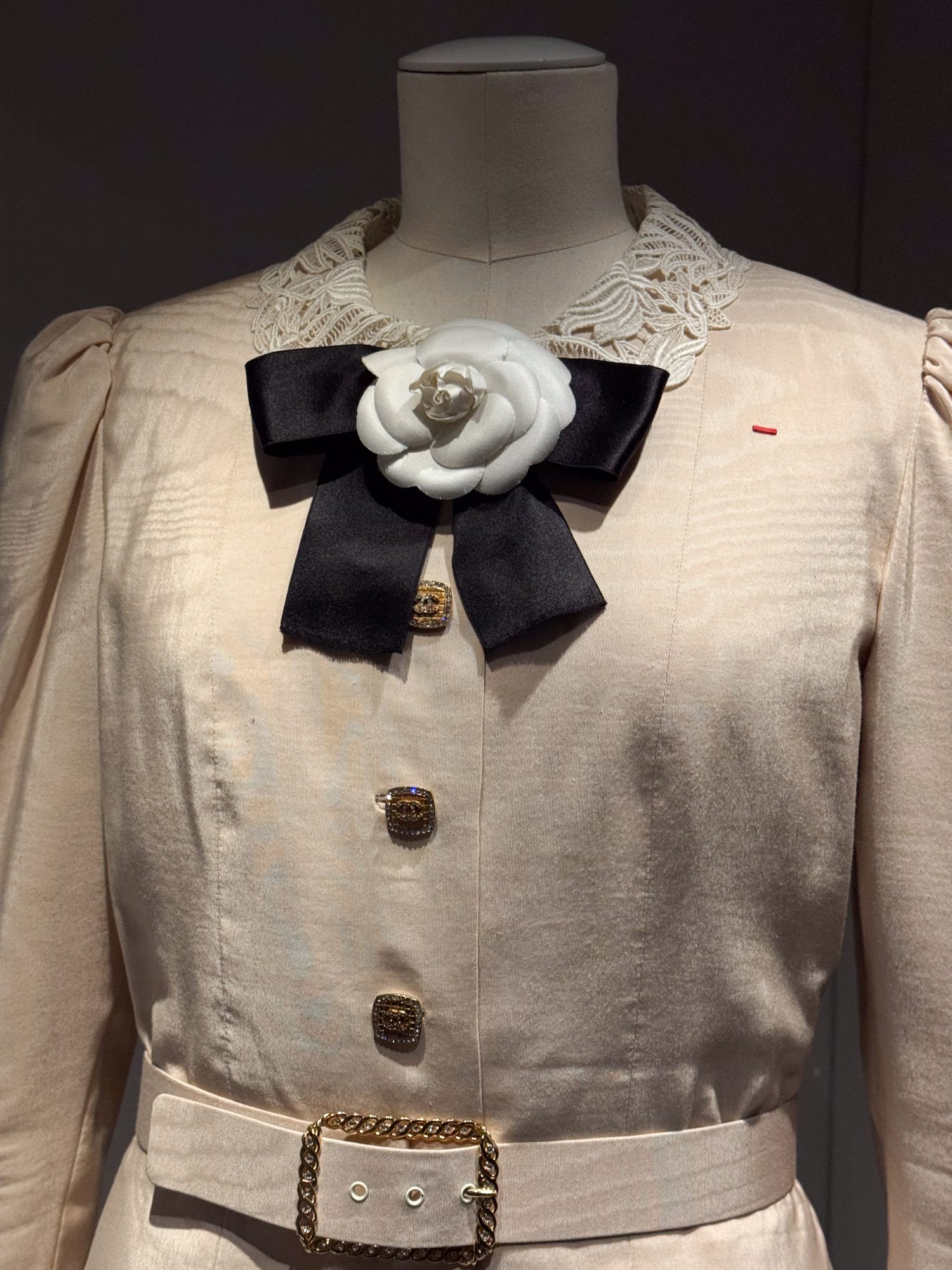
Their presence in both women’s and men’s wardrobes, between periods of glory and more discreet eras, reflects the evolution of manners over the ages, as well as that of silhouettes and sought-after aesthetics, oscillating between the quest for realism and naturalism or a more surreal spirit.
The pieces thus question the relationship to art and nature, demonstrating the infinite possibilities offered by the botanical motif.
The flower at the heart of a bouquet of inspirations from various horizons
In addition to highlighting the evolution of fashion, the floral motif also reflects the importance of other cultures in French tailoring, and more specifically, in Parisian style.
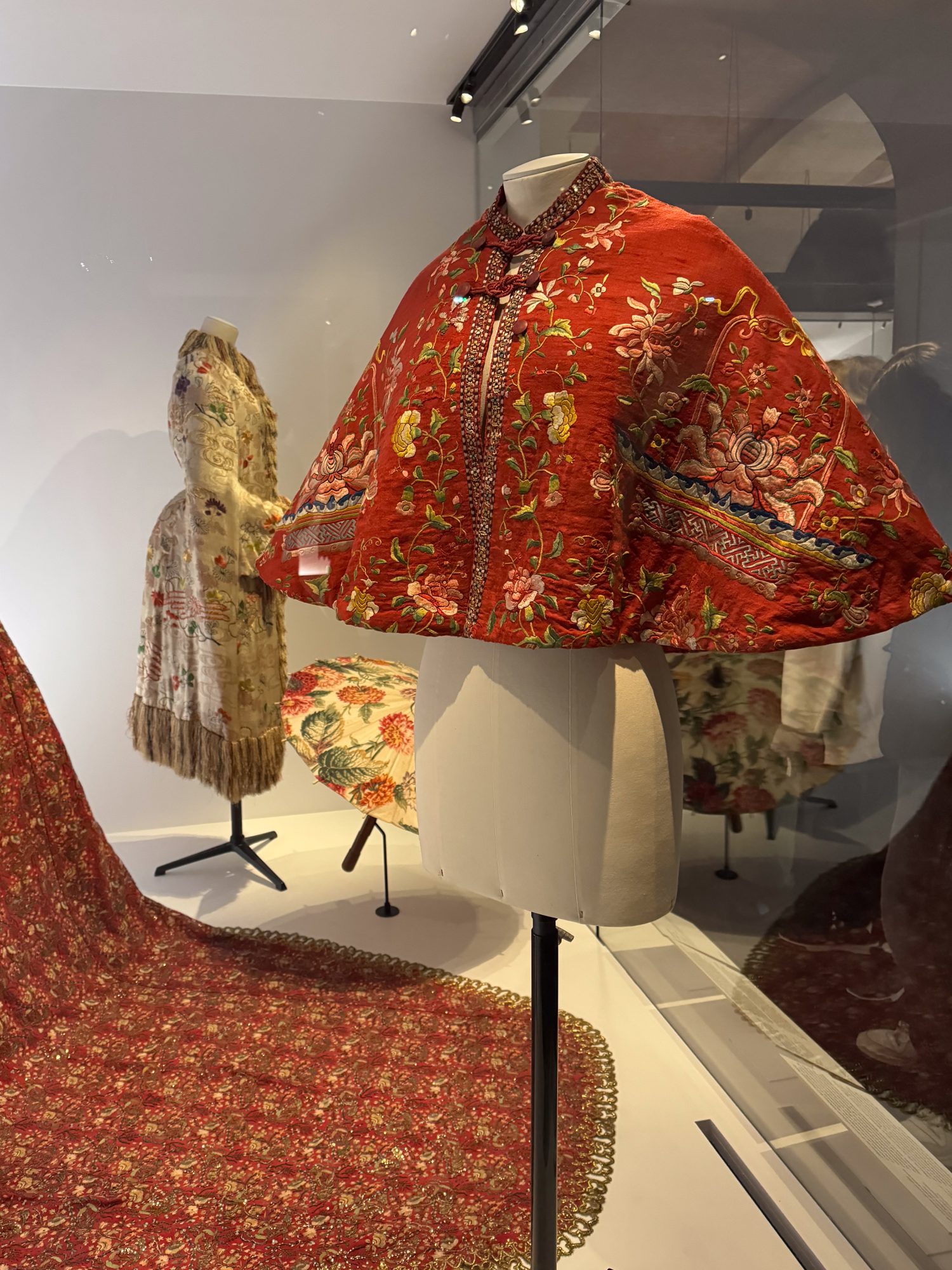
Whether through the reproduction of patterns and embroidery (inspired by pieces discovered along the Silk Road), the importation of tools and printed fabrics, the establishment of French factories specializing in the making of Indian prints, or even the repurposing of creations imported from the East adapted to the taste of the Parisian silhouette…
These bouquets of inspirations, coming from India, China, or even Japan, have adorned the garments of a clientele in search of exoticism, before creating a new language with hybrid motifs, originating from various cultures.
The exhibition Weave, Embroider, Enhance. The Craftsmanship of Fashion is presented until October 18, 2026. Discover our other recommended visits on Modalova, including the dialogue Dior x Azzedine Alaïa or The Reveries of Stones by Roger Caillois.