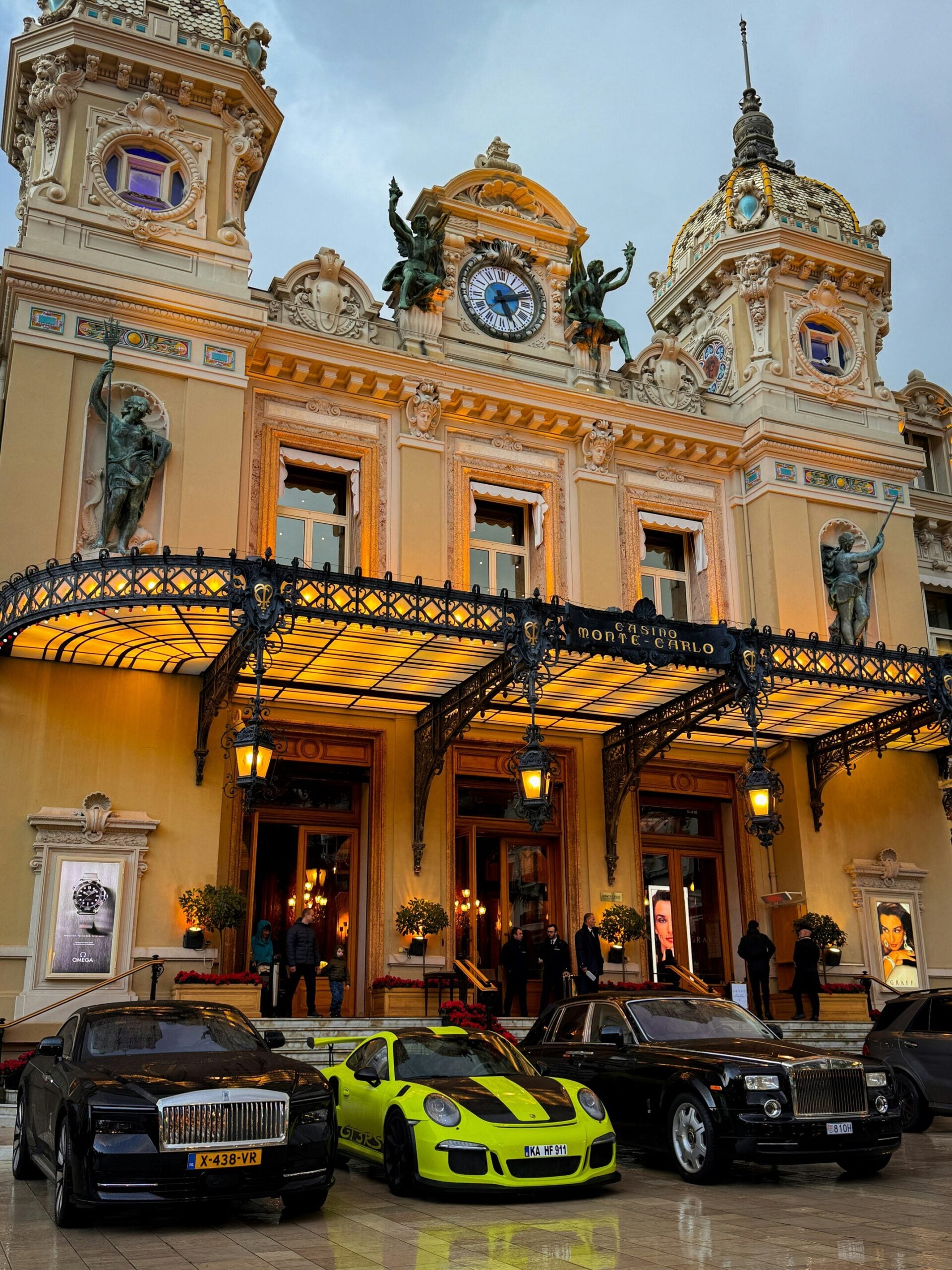
The enduring glamour of the Casino de Monte-Carlo
Some buildings set the tone for an evening before it has even begun. The Casino de Monte-Carlo is one of them. With its gilded ornament, crystal chandeliers and Belle Époque proportions, it has spent more than a century shaping an idea of Riviera glamour in which architecture and personal style seem almost inseparable.
A Belle Époque jewel designed by Charles Garnier
The Casino’s defining transformation came in 1879, when Charles Garnier, architect of the Palais Garnier in Paris, brought an operatic sensibility to Monte-Carlo. Domes, pinnacles and richly ornamented interiors gave the building the theatrical presence of a cultural institution rather than a conventional gaming room.
Garnier created a setting in which arrival became part of the spectacle. The architecture was designed to be noticed, establishing the Casino as one of the Riviera’s most distinctive expressions of Belle Époque luxury.
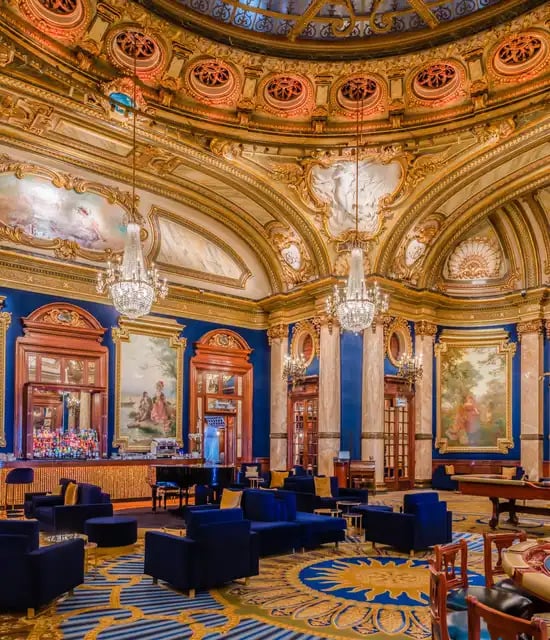
Inside Monte-Carlo’s most opulent rooms
No single decorative formula defines the interiors. As documented in detail by the Casino’s own archives, the Salle Europe combines a glass roof with Bohemian crystal chandeliers, surrounded by paintings and elaborate ornamentation.
Elsewhere, the Salon Rose shifts towards warmer tones, while the Salle Blanche carries its own artistic history. Moving between them is less like crossing a succession of gaming rooms than passing through a series of carefully composed salons, each with a distinct character.
The art of lighting Monte-Carlo
Light is as important here as ornament. Crystal, mirrors, gilded surfaces and decorative glass catch and diffuse it, illustrating the principles of good lighting design in any interior on an unusually lavish scale.
Fashion works with light in much the same way. Metallic thread comes alive with movement, jewellery draws brightness towards the face and satin changes subtly as its wearer crosses a room. At Monte-Carlo, the architecture has a similar sensitivity to reflection, texture and glow.
When interiors and fashion speak the same language
Velvet, silk, gold and crystal belong as comfortably to an evening wardrobe as they do to these historic salons. Their allure is rooted in texture and reflection: velvet absorbs light, silk responds to movement and jewellery introduces just enough brilliance.
This shared vocabulary of materials gives Monte-Carlo a natural affinity with fashion. Against such elaborate surroundings, evening dress becomes part of the composition. A sharply cut dinner jacket, a fluid silk gown or sculptural gold jewellery feels entirely at home among mirrored surfaces and gilded details.
The result is a particular vision of Riviera elegance: polished, sensual and considered, without relying on excess for effect.
How dressing up became part of the experience
Monte-Carlo’s relationship with formal dressing is closely tied to its history as a social destination. When the surroundings create a sense of occasion, clothes tend to follow. The evening wardrobe traditionally associated with the Casino reflects that atmosphere: refined rather than ostentatious, deliberate rather than casual.
The appeal extends beyond any particular dress code. Part of the enduring fantasy of a Riviera evening lies simply in the pleasure of dressing differently after nightfall.

Why the Monte-Carlo aesthetic still resonates
Over time, the visual codes associated with places like Monte-Carlo have travelled far beyond their original interiors. Deep reds, flashes of gold, playing-card symbols and roulette imagery have become part of a broader cultural shorthand for casino glamour. The same references now appear across film, fashion and digital entertainment, where those who play at an online casino encounter reinterpretations of a visual language first established in grand European salons.
What remains difficult to reproduce is the particular convergence found in Monte-Carlo itself: architecture, decorative art, fashion and social ritual occupying the same space. More than a century after Garnier shaped its most famous rooms, the Casino still makes a persuasive case for an enduring idea of luxury — that the setting matters just as much as the occasion.